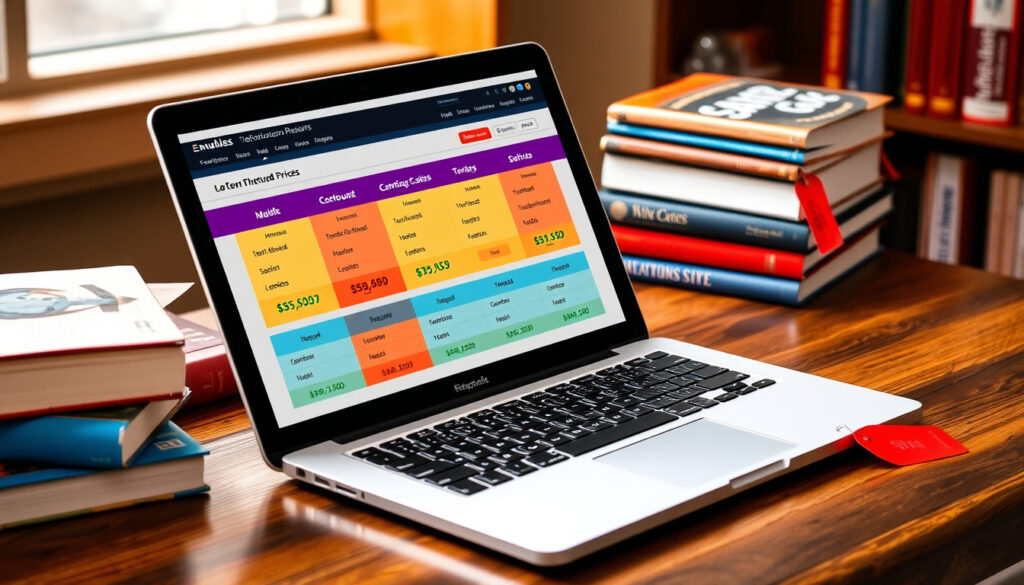
Where to Find Cheap Textbooks: Top Comparison Sites
Textbooks cost a small fortune, but students who know where to look routinely cut those bills by half or more. The difference isn’t luck—it’s knowing which comparison tools actually work and which sellers consistently undercut the campus store. This guide cuts through the noise with the platforms that genuinely deliver savings.
Top comparison sites: BookFinder, CheapestTextbooks · Max savings claimed: 95% off · Free textbook platforms: LibreTexts, Open Textbook Library · Used book sellers: AbeBooks
Quick snapshot
- BookFinder searches over 100,000 sellers (BookFinder)
- CheapestTextbooks claims up to 95% off (CheapestTextbooks)
- BookScouter aggregates 20+ bookstores (BookScouter Blog)
- Whether 95% off applies to popular course titles or niche texts
- Actual user experience with buyback processes varies
- BookScouter updated its top 12 sites list for 2026 (BookScouter Blog)
- Amazon discontinued textbook rentals; used remains available (MEFA)
- Compare total cost including shipping before purchasing
- Verify ISBN matches your required edition exactly
| Platform | Key feature |
|---|---|
| BookFinder.com | 100,000+ sellers, global reach |
| CheapestTextbooks.com | Up to 95% off, ISBN search |
| SlugBooks | School/class/ISBN search |
| BookScouter | 20+ bookstores aggregated |
| AbeBooks | Amazon subsidiary, used/rare texts |
| CampusBooks.com | Buy vs rent tool, library search |
What is the best website to find cheap books?
Price comparison aggregators are the fastest way to find cheap textbooks because they search dozens of sellers simultaneously rather than forcing you to visit each one. BookFinder.com compares prices from over 100,000 sellers for new, used, and rental textbooks, including shipping and coupons (BookFinder). SlugBooks focuses on school-specific searches, pulling prices from major sellers like Amazon and Chegg (SlugBooks). CheapestTextbooks.com searches the internet for the cheapest buy and rent prices, with a mobile app for barcode scanning (CheapestTextbooks).
BookFinder.com price comparison
BookFinder leads on sheer volume—it indexes over 100,000 sellers worldwide, making it the widest net for international editions and rare used copies. Beyond new and used, it covers textbook rentals and buyback prices with shipping included (BookFinder). The trade-off is that a broad search can return overwhelming results; sorting by condition and total price helps narrow the field.
AbeBooks for used textbooks
AbeBooks, an Amazon subsidiary, specializes in used, rare, and out-of-print books and textbooks from independent sellers. Condition ratings (like new, very good, good, acceptable) help buyers gauge quality before purchasing. Because sellers are independent, prices and shipping policies vary more than on unified platforms.
CheapestTextbooks.com aggregator
CheapestTextbooks leans heavily on its 95% off claim, using ISBN searches to compare millions of books across sellers (CheapestTextbooks). Its mobile app’s barcode scanner is useful when you have the physical book but not the ISBN. The platform transfers you to the seller’s site to complete purchases, so check for additional shipping costs at checkout.
Aggregator sites show you where to buy, but the final price depends on the seller’s shipping policy. ThriftBooks offers free standard shipping on US orders over $15, while Alibris requires $39, and TextbookRush sets its threshold at $35 (BookScouter Blog).
Is there a place to get free textbooks?
Yes, but “free” requires verification. Open educational resource (OER) platforms like LibreTexts and the Open Textbook Library offer legitimately free, openly licensed textbooks. These are real alternatives for subjects like mathematics, sciences, and humanities, though not every course has a free option. The content is usually comparable to traditional textbooks, but check that the edition matches your syllabus before committing.
LibreTexts platform
LibreTexts hosts a library of free, peer-reviewed textbooks across multiple disciplines. Content is openly licensed, meaning instructors can adapt materials and students can access them without creating an account or paying. The platform covers STEM subjects particularly well, though humanities coverage varies by institution.
Open Textbook Library
The Open Textbook Library, backed by academic institutions, curates textbooks that have been reviewed for quality and open licensing. Titles span business, sciences, social sciences, and humanities. Because these are peer-reviewed, you can trust the academic rigor, but availability for niche upper-division courses remains limited.
BooksRun free options
BooksRun primarily sells textbooks but occasionally lists free digital copies as promotions. For the most reliable free access, stick with established OER platforms rather than expecting free options on commercial resellers.
Free textbooks often require internet access to read online or download. If you need offline access or prefer physical copies, budget for printing costs or explore library holdings.
How to get a discount on textbooks?
The fastest route to discounts is buying used instead of new. Amazon offers used textbooks up to 90% off list price, with free two-day shipping for Prime Student members (MEFA). Renting textbooks is another proven strategy—sites like CheapestTextbooks and CampusBooks include rental options that typically cost 50–80% less than purchasing new. International editions, often identical in content but cheaper to produce, can save 30–60% when your instructor approves them.
Second-hand from charity shops
Campus and local charity shops occasionally stock donated textbooks at steep discounts. The selection is hit-or-miss, and you won’t find rare or recent editions, but the prices can be unbeatable. Check university-run secondhand stores when available on campus.
Buy from former students
University social media groups, Reddit communities, and campus bulletin boards connect you directly with students who’ve just finished your course. These transactions skip retail margins entirely, often resulting in 40–70% below list price. Agree on condition standards and payment methods before meeting.
14 ways from SaveTheStudent
Student advocacy organization SaveTheStudent catalogs 14 distinct strategies for textbook savings, including buyback tricks, price matching, and timing purchases around sales cycles. Their guidance emphasizes comparing total costs (including shipping) rather than sticker prices.
Where do Harvard students buy their textbooks?
Harvard-affiliated students typically start at the Harvard Coop or course-specific campus stores for immediate access, especially when first-year orientation or syllabus changes require quick fulfillment. However, price-conscious students across universities—including Harvard—increasingly turn to online aggregators for the best deals. The campus store remains practical for last-minute needs, but the highest savings consistently come from comparison shopping online.
Campus stores
Campus bookstores offer convenience and immediate availability, but convenience comes at a premium. Prices typically run 20–50% higher than online alternatives, and buyback values are often minimal unless you’re selling back to the same store. Use campus stores when you need the book today or when your instructor specifically requires the bundled access code.
International office resources
International students may have access to programs that ship textbooks to their home country, potentially lowering costs for students studying abroad. University international offices sometimes maintain lists of approved international editions that are significantly cheaper than US versions while covering the same material.
Which websites can I get books for free?
Legitimate free book sites include Project Gutenberg (public domain classics), Open Textbook Library (peer-reviewed academic texts), and LibreTexts (adaptable STEM materials). Google Books and Amazon’s Kindle owners’ lending library occasionally offer free titles, though these are largely fiction and non-academic. For textbooks specifically, open educational resource platforms are the most reliable path to zero-cost access.
Free book platforms overview
Project Gutenberg offers over 70,000 free ebooks, but its catalog is limited to public domain works—mostly pre-1924 publications. For textbooks, Open Textbook Library and LibreTexts are more directly useful, covering contemporary course materials across popular subjects.
Verify online textbook freedom
Not every site advertising “free textbooks” delivers legal access. Some aggregate links to pirated PDFs, which violate copyright and may expose your device to malware. Stick to established OER platforms with explicit open licensing to ensure you’re accessing content legally and safely.
Aggregator sites like BookFinder and CheapestTextbooks put the power in your hands—students who compare prices before buying routinely pay half what their classmates spend. Start with BookFinder for the widest seller net, then narrow down with site-specific filters.
How to Buy Cheap Textbooks: Step-by-Step
Seven steps separate you from significant textbook savings. Each phase takes minutes but can cut your per-book spending dramatically.
- Find your ISBN. Check your course syllabus or campus bookstore website for required textbooks. Every book has a unique ISBN (10 or 13 digits) that makes price searching precise.
- Run a comparison search. Enter the ISBN into BookFinder.com, CheapestTextbooks.com, or SlugBooks. These aggregators return results from dozens of sellers within seconds.
- Sort by total price. Filter results to include shipping costs. A book listed at $5 with $12 shipping costs more than a $12 book with free shipping.
- Check condition ratings. For used books, review the seller’s condition scale. “Like new” and “very good” are safest for required readings you’ll reference all semester.
- Verify the edition. Confirm the ISBN matches your required edition exactly. International editions may differ in problem sets or page numbering.
- Compare buy vs rent. If your course only needs the book for one term, rental often costs 50–80% less than purchase. CampusBooks.com includes a patent-pending buy vs rent calculator.
- Complete your purchase. Buy from the aggregator’s linked seller or directly on Amazon, AbeBooks, or ThriftBooks. Keep confirmation emails until the book arrives in acceptable condition.
Upsides
- Savings up to 95% versus campus store prices
- Aggregator tools search multiple sellers at once
- Used and rental options reduce costs further
- International editions offer legitimate alternatives
- Buyback tools help recover costs at semester end
Downsides
- Shipping delays versus immediate campus store pickup
- Condition varies on used books; verify ratings carefully
- Edition mismatches if ISBN isn’t confirmed
- Some sites transfer you to third-party checkout
- Rented books must be returned; buyback isn’t guaranteed
Platform Comparison: Aggregators vs Direct Sellers
Four aggregators and six direct sellers cover most student textbook needs. Each category has distinct advantages depending on whether you prioritize selection breadth, total price transparency, or buyer experience.
| Platform | Type | Sellers/Books | Key advantage |
|---|---|---|---|
| BookFinder.com | Aggregator | 100,000+ sellers | Global reach, buyback comparison |
| CheapestTextbooks | Aggregator | Millions of books | Up to 95% off claim, barcode app |
| SlugBooks | Aggregator | Amazon, Chegg, others | School/class search |
| BookScouter | Aggregator | 20+ bookstores | Buyback price visibility |
| Amazon | Direct seller | Used books | 90% off used, Prime Student |
| AbeBooks | Direct seller | Used, rare, out-of-print | Independent seller variety |
| ThriftBooks | Direct seller | Used books | Free ship over $15 US |
| Textbooks.com | Direct seller | 10+ million books | Rent/buy/sell, price match |
| CampusBooks | Aggregator | Multiple formats | Buy vs rent tool, library search |
| TextbookRush | Direct seller | Used/new | 90% off, free returns |
The implication: aggregators work best when you’re hunting the absolute lowest price across all sellers, while direct sellers like ThriftBooks or AbeBooks often deliver a simpler buying experience with consistent policies even if one seller undercuts the aggregator field.
Where to Get Free vs Paid Textbooks
Free and paid textbook sources occupy different niches. Understanding which situations call for which type prevents wasted time and ensures you access the right resources for each course.
| Source type | Platform examples | Cost | Best for |
|---|---|---|---|
| Open educational resources | LibreTexts, Open Textbook Library | Free | Core STEM, humanities courses |
| Price aggregators | BookFinder, CheapestTextbooks | Varies (often 70–95% off) | Any required textbook |
| Used book marketplaces | AbeBooks, ThriftBooks | 40–80% off | Physical copies, specific editions |
| Rental platforms | Textbooks.com, eCampus | 50–80% off purchase | Single-term use |
The pattern: free sources cover foundational courses well but thin out for upper-division and specialized subjects. When OER doesn’t serve your course, aggregators consistently outperform any single seller on price.
“We’ve seen $200 textbooks selling for less than $10 online through comparison tools.” — SlugBooks
“Save up to 90% by comparing prices from over 100,000 sellers.” — BookFinder
The trade-off for students is clear: spending five minutes on a comparison search before purchasing almost always beats buying immediately from the campus store. Aggregator tools exist precisely to solve the information gap that lets retailers charge premium prices. BookFinder and CheapestTextbooks represent the two best starting points—one for maximum seller breadth, the other for aggressive discount claims and mobile convenience. For students who need free options, LibreTexts and Open Textbook Library cover enough ground that checking them first costs nothing but a few minutes. When neither free nor comparison-shopped option works, AbeBooks and ThriftBooks reliably deliver used copies at a fraction of retail. The tools are there; using them consistently is what separates students who overspend from those who systematically minimize textbook costs.
Related reading: Best Home Loan Rates NZ – Lowest Fixed and Floating Deals · 45 AUD to NZD – Current Rate, Trends and Best Providers
Frequently asked questions
What is the 5 finger rule for books?
The 5 finger rule is a reading level assessment tool. When reading a page, hold up one finger for each word you don’t know. Five or more unknown words per page suggests the text is too difficult for independent reading. This rule applies more to recreational reading than textbooks, where technical vocabulary is expected.
Are online textbooks actually free?
Some are genuinely free through open educational resource platforms like LibreTexts and Open Textbook Library. Others advertised as free may require registration, include paywalled premium content, or exist in legally gray areas. Stick to established OER platforms to confirm actual zero-cost access.
Can I get textbooks for free?
Yes, through open educational resource platforms, library inventory searches (CampusBooks includes a free library search feature), and occasional promotional freebies on commercial sites. However, not every course has a free textbook option available—coverage varies significantly by subject and institution.
Where to find cheap textbooks near me?
“Near me” options include campus bookstores, local used bookstores, and university social media groups where students sell directly. Online aggregators like BookFinder still typically undercut all local options, but immediate physical access has value if you’re buying last-minute before a semester starts.
What is Bigwords for textbooks?
Bigwords (now largely integrated into other comparison platforms) was an early price comparison tool for textbooks. While the standalone service has diminished, the core function—comparing buyback and purchase prices across sellers—continues through BookScouter, CheapestTextbooks, and similar aggregators.
Are used textbooks a reliable option?
Yes, used textbooks are reliable when you verify condition ratings before purchasing. Sellers on AbeBooks, ThriftBooks, and Amazon clearly rate condition (like new, very good, good, acceptable). For required course readings you’ll reference all semester, stick to “like new” or “very good” conditions to ensure readability and complete content.
What should I check before buying a used textbook?
Verify the ISBN matches your required edition exactly, review the seller’s condition rating, confirm total price including shipping, and check the seller’s return policy. For textbooks with access codes, confirm whether the code is unused—some codes become invalid once activated.
More related posts
 State Highway 63 Marlborough Cracks: Updates & Closures
 Mission Heights Primary School: Principal, Enrollment, Decile
 6 Weeks From Today – Exact Date and Pregnancy Milestones
 NRL All Stars 2026: Indigenous vs Māori Team Lists
 Arsenal F.C. vs PSV Eindhoven Lineups: 7-1 Win Match Recap
 Range Rover for Sale NZ: Prices, Models & Buying Guide 2025
 Devis de Prêt Hypothécaire: Compare Bank Mortgage Simulations
 Bed Bath and Beyond Whakatane – Store Status Explained