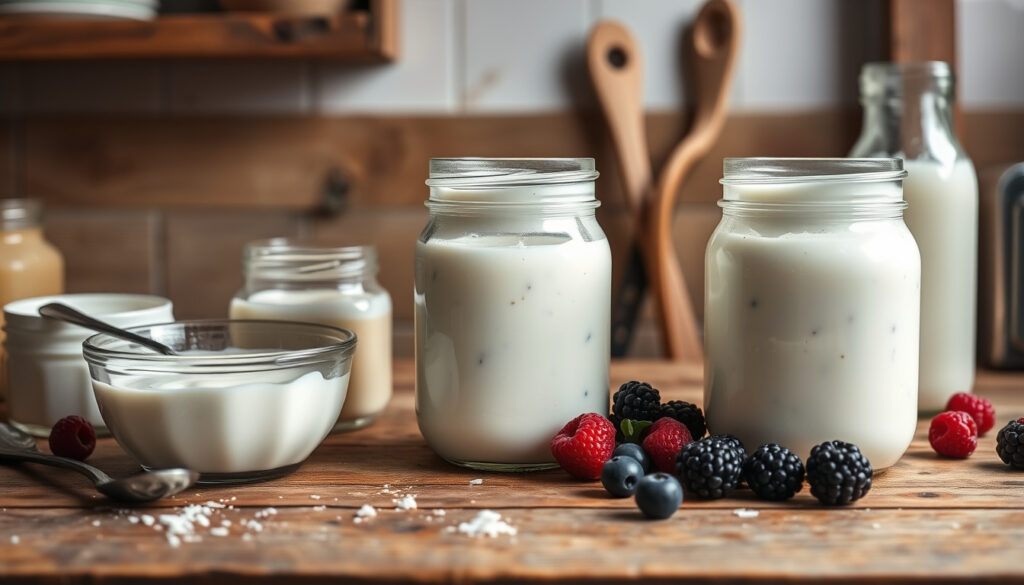
How to Make Yogurt at Home – Step-by-Step Guide
Making yogurt at home requires just two core ingredients and basic equipment found in most kitchens. The process centers on fermenting milk with live bacterial cultures, transforming liquid into thick, tangy yogurt over several hours. Whether using dairy milk or plant-based alternatives, the fundamental technique remains accessible to home cooks without specialized training.
This guide covers everything from ingredient selection to troubleshooting common problems. It draws on tested methods from multiple sources to help ensure consistent results on your first attempt or subsequent batches. The process demands minimal active time, with most of the work occurring automatically during fermentation.
How Do You Make Yogurt at Home Step by Step?
The yogurt-making process follows a straightforward sequence: heat the milk, cool it to the proper temperature, add starter cultures, and allow fermentation to occur undisturbed. Each step influences the final texture and flavor of your yogurt.
Key Insights for Success
- Use ultra-pasteurized milk only if seeking foolproof results; standard pasteurized milk works for most home recipes
- Maintain incubation temperature between 108°F and 112°F for optimal culture growth
- Homemade yogurt costs roughly 50% less than comparable store-bought varieties
- Live starter cultures boost probiotic content compared to some commercial products
- Greek-style yogurt requires additional straining time but delivers superior thickness
- Avoid disturbing the mixture during fermentation to prevent breaking the culture chain
| Factor | Recommendation |
|---|---|
| Milk Type | Whole or 2% milk produces best texture |
| Starter | 2 tablespoons plain yogurt with live cultures |
| Heating Temp | Heat to 180°F, cool to 110°F |
| Incubation | 8-12 hours at 110°F in a warm environment |
| Cost per Quart | $1-2 depending on milk price |
The Step-by-Step Process
Begin by heating your milk in a clean saucepan over medium heat until it reaches approximately 180°F. This temperature kills any unwanted bacteria and helps proteins in the milk set properly. Stir occasionally to prevent scorching on the bottom of the pan.
Remove the milk from heat and allow it to cool to 110°F. This cooling period is critical—adding starter when the milk is too hot will kill the beneficial cultures. A digital thermometer eliminates guesswork and improves consistency across batches.
Once cooled, whisk in your starter culture until fully incorporated. Pour the mixture into your prepared container and maintain the 110°F temperature for 8-12 hours. The longer fermentation time produces tangier yogurt, while shorter periods yield milder results. According to the University of Minnesota Extension, consistent temperature control directly impacts culture viability and final texture.
What Ingredients and Starter Do You Need?
The ingredient list for homemade yogurt remains short: milk and a starter culture form the foundation. Optional additions like thickeners or sweeteners allow customization, but the basic recipe functions with just these two components.
Choosing the Best Milk
Whole milk and 2% milk produce the creamiest results, while skim milk yields thinner yogurt. Ultra-pasteurized milk offers convenience but may behave differently due to the high-heat processing. Many home makers find that standard pasteurized milk provides more reliable culturing, though experimentation with different brands often proves necessary.
Plant-based alternatives work when using appropriate starters and methods. Soy milk represents the most reliable option for vegan yogurt, according to multiple sources including Veggie Funk Kitchen. Almond milk also produces acceptable results, though success rates vary more significantly between brands.
Understanding Starter Cultures
A yogurt starter contains live bacterial cultures that ferment the milk’s lactose into lactic acid. This acidification causes the milk proteins to coagulate and thicken. Without a starter with live active cultures, the fermentation process simply will not occur.
Commercial yogurt culture packets offer the most consistent results for beginners. Alternatively, reserve 2 tablespoons from a store-bought yogurt with clearly labeled live active cultures. Brands such as Forager Project have been recommended by home yogurt makers for their reliable bacterial content.
Store-bought yogurt works as a starter if it contains live cultures and comes from a batch made with similar methods. Avoid flavored yogurts with added fruits or stabilizers, as these may interfere with the culturing process. Each subsequent batch can use 2 tablespoons from your previous homemade batch, though some practitioners recommend returning to a commercial starter every few generations to maintain culture strength.
Do You Need Special Equipment to Make Yogurt?
A yogurt maker simplifies the process by maintaining consistent temperatures automatically, but it is not strictly required. The essential requirement involves keeping the milk mixture warm at approximately 110°F for the fermentation period.
Alternative Incubation Methods
Several household items can serve as yogurt incubation environments. An Instant Pot with a yogurt function maintains the required temperature precisely, making it a popular choice among home yogurt makers. A slow cooker on its lowest setting, or a warming tray designed for plant propagation, also works effectively.
Without any specialized equipment, place your covered container in an oven with the light on—this generates gentle warmth—or in an insulated cooler with hot water bottles to maintain temperature. According to Vegan Runner Eats, the key is cooling your milk base to 105-110°F, adding cultures, and keeping the mixture in a consistently warm location for the full 12-hour incubation period.
Basic Equipment Checklist
- Clean saucepan for heating milk
- Digital thermometer for accurate temperature monitoring
- Insulated container or yogurt maker for incubation
- Whisk for incorporating starter
- Fine-mesh strainer or cheesecloth for Greek-style yogurt
- Glass containers with lids for storage
Why Didn’t My Homemade Yogurt Set? Troubleshooting Tips
Yogurt that fails to thicken typically stems from one of several common causes. Identifying the issue requires reviewing your specific process steps and comparing them against the recommended parameters.
Temperature-Related Problems
If the milk reached too high a temperature before adding starter, the beneficial bacteria would have been destroyed. Conversely, insufficient heat may fail to denature milk proteins properly, resulting in weak gel structure. Temperature fluctuations during incubation also disrupt the culture chain, preventing proper fermentation.
The FDA food safety guidelines note that yogurt must reach 110°F during fermentation while remaining below temperatures that would kill the cultures. An Instant Pot yogurt setting or dedicated yogurt maker manages this automatically.
Starter Issues
Using too little starter reduces the bacterial population below the threshold needed for visible thickening. Old or compromised starter cultures from expired yogurt may no longer contain viable bacteria. Improper incorporation—allowing starter to clump rather than distribute evenly—creates localized areas where fermentation failed to initiate.
Milk Selection Problems
Ultra-pasteurized milk undergoes processing temperatures that may damage proteins essential for proper setting. Some plant-based milks contain stabilizers or lack the protein content necessary for coagulation. Different brands of soy milk set at varying rates, suggesting that some experimentation may be necessary to find the most suitable option.
Never use ultra-pasteurized milk without testing first. Many home yogurt makers report failure when using milk processed at excessively high temperatures. Standard pasteurized milk or shelf-stable varieties typically yield more predictable outcomes.
How to Store Homemade Yogurt and Make Variations
Proper storage maintains the quality and safety of your homemade yogurt throughout its usable lifespan. The refrigerator environment slows but does not stop bacterial activity, preserving the product for extended consumption. For a delicious side dish, consider this easy cob loaf recipe. easy cob loaf recipe
Storage Guidelines
Transfer finished yogurt to clean glass containers with tight-fitting lids. Refrigerate immediately and maintain cold temperatures below 40°F. Homemade yogurt remains safe for consumption for 1-2 weeks when properly refrigerated, according to USDA food safety resources. Discard any yogurt showing signs of mold, unusual odor, or separation with excessive liquid.
Creating Greek-Style Yogurt at Home
Greek yogurt undergoes straining to remove whey and achieve its characteristic thick texture. Line a fine-mesh strainer with cheesecloth or a coffee filter, then spoon your fermented yogurt into the prepared vessel. Place the strainer over a bowl and refrigerate for 5-6 hours for moderately thick results, or up to 24 hours for firm, labneh-style yogurt.
The liquid that drains off represents whey—a nutritious byproduct that some cooks use in smoothies or bread recipes. Longer straining produces thicker yogurt but reduces total yield, as significant volume is lost through moisture removal.
Flavor Customization
Keep your base yogurt unflavored and unsweetened during fermentation, then customize each serving according to preference. This approach maximizes versatility, allowing the same batch to serve both sweet applications like granola parfaits and savory uses such as tzatziki or raita. Add honey, maple syrup, vanilla extract, or fresh fruit just before serving.
How Long Does the Complete Yogurt-Making Process Take?
Understanding the timeline helps manage expectations and schedule your yogurt-making appropriately. The process involves distinct phases, each with specific duration requirements.
- Heating milk: Approximately 10 minutes over medium heat until reaching 180°F
- Cooling period: 15-30 minutes until milk reaches 110°F for starter addition
- Initial preparation: 5 minutes to whisk in starter and transfer to incubation vessel
- Fermentation: 8-12 hours of inactive incubation time at 110°F
- Refrigeration: Minimum 2-4 hours chilling before consumption improves texture
- Straining (optional): 5-24 hours for Greek-style thickness if desired
The total elapsed time from start to finished product spans approximately 12-14 hours, with active preparation time limited to roughly 30 minutes. Most home makers prepare yogurt in the evening, allowing fermentation to complete overnight, then refrigerate in the morning for evening consumption.
Is Homemade Yogurt Safe to Eat?
Homemade yogurt poses minimal safety risks when prepared using pasteurized milk and proper temperature control throughout fermentation. The culturing process itself creates an acidic environment that inhibits many harmful bacteria.
| Aspect | Established Information | Uncertainty Area |
|---|---|---|
| Safety | Safe when milk is pasteurized and incubation stays at 110-115°F | Wild cultures from non-pasteurized sources carry unknown risk profiles |
| Probiotic content | Live cultures present when using quality starter | Specific bacterial counts vary by batch; home testing not practical |
| First-attempt success | N/A | Wild cultures may fail 10-20% of first attempts—commercial starters improve reliability |
Why Make Yogurt at Home?
Commercial yogurt production involves pasteurization, culturing, and packaging that often includes stabilizers, added sugars, and flavorings. Homemade versions allow complete control over ingredients, enabling customization for dietary restrictions, flavor preferences, or budgetary considerations.
The scientific basis for yogurt-making involves live bacterial cultures fermenting lactose into lactic acid. This acidification causes milk proteins to coagulate into the gel structure characteristic of yogurt. The University of Minnesota Extension explains that controlled temperature ensures optimal culture activity without allowing harmful bacteria to compete.
Cost savings represent another significant motivation. A quart of quality yogurt often costs $4-6 at retail prices, while homemade equivalents require only milk and a small amount of starter, typically totaling $1-2 per quart depending on milk costs.
“Temperature is key—too hot kills cultures, too cool prevents fermentation. The 110°F window is narrow but manageable with proper equipment.”
Summary and Next Steps
Making yogurt at home requires minimal equipment and yields superior results compared to many commercial products. The process centers on heating milk, cooling it properly, adding viable starter cultures, and maintaining consistent incubation temperatures for 8-12 hours. Success depends on using quality ingredients, controlling temperature precisely, and allowing adequate fermentation time.
For those interested in expanding their homemade dairy skills, consider exploring related kitchen techniques. How Long to Hard Boil an Egg – Perfect Times by Size and Method provides guidance on another fundamental kitchen skill that complements homemade yogurt in breakfast preparation.
Frequently Asked Questions
Can I make yogurt without a yogurt maker?
Yes, alternative methods include using an Instant Pot yogurt setting, a slow cooker on low heat, an oven with the light on, or placing containers in an insulated cooler with hot water bottles. The key requirement is maintaining approximately 110°F for 8-12 hours.
What is the best milk for making yogurt?
Whole milk or 2% milk produces the creamiest results. Standard pasteurized milk typically cultures more reliably than ultra-pasteurized varieties. For plant-based options, soy milk offers the most consistent results, followed by almond milk.
Can I use store-bought yogurt as a starter?
Store-bought yogurt works as a starter if it contains live active cultures. Use 2 tablespoons per quart of milk, choosing plain yogurt without added fruits, flavors, or stabilizers. Brands with clearly labeled live cultures, such as Forager Project, have proven reliable among home makers.
How do I know when my yogurt is done fermenting?
The yogurt should have thickened noticeably and developed a tangy aroma. The texture should be firm enough to hold its shape when spooned. If it still appears thin after 12 hours, allow additional incubation time up to 14-16 hours total.
Why does my yogurt taste sourer than store-bought?
Longer fermentation produces more lactic acid, resulting in tangier flavor. Commercial yogurts often use shorter incubation times and may add sweetness to mask acidity. Adjust your fermentation duration to achieve your preferred flavor profile.
How long does homemade yogurt last?
Properly refrigerated homemade yogurt remains safe for 1-2 weeks. Store in clean glass containers with lids and discard if you notice mold, off-odors, or excessive separation with pooling liquid on the surface.
Can I make yogurt from oat milk or cashews?
Yes, alternative bases like oats, cashews, or blended nut-oat combinations can produce vegan yogurt. These require additional thickeners such as tapioca starch and may need longer fermentation times to develop adequate thickness and tang.
More related posts
 West Auckland Power Outage: Check Causes & Safety Tips
 Earthquake Wellington Just Now Live: Track & Prepare
 NZ Take Home Pay Calculator: Calculate Your Net Salary in 2026
 Cast of Beyond Paradise: Guest Stars, Departures, Locations
 Be t Life In urance NZ 2026: Compare Top Provider & Find the Cheape t
 Civil Engineer Salary in NZ: Averages by Experience
 Astrid How to Train Your Dragon Live-Action Cast & Controversy
 Pak n Save Ormiston: Parking, Hours, Specials Guide