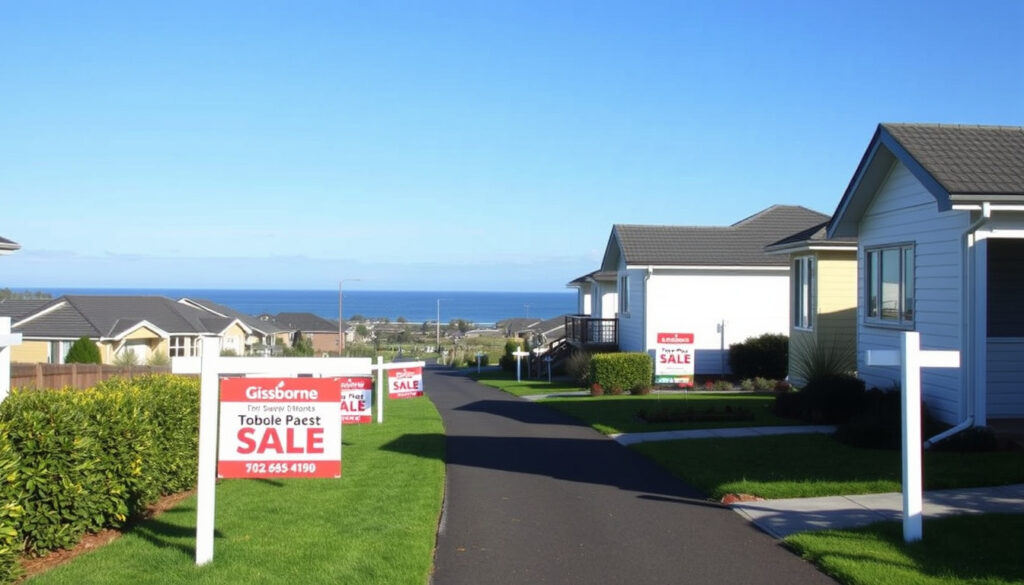
Gisborne Property for Sale – Latest Prices Suburbs Market Guide
Gisborne’s housing market has drawn renewed attention from buyers seeking coastal living at more accessible price points than larger New Zealand centres. With a median house price of $565,000 as of January 2026 and a track record of robust regional growth, the city on the east coast presents a distinct set of opportunities and considerations for prospective purchasers.
The region recorded a 70% year-on-year sales increase in June 2025, outpacing national trends even as listings expanded by 22.8% annually. This combination of rising transaction volumes and tightening inventory has positioned Gisborne among the country’s more dynamic provincial property markets heading into 2026.
Understanding the current landscape—suburb-level pricing, available property types, and market momentum—can help buyers make informed decisions whether they are searching for a family home, an investment property, or a lifestyle block.
What Properties Are Currently for Sale in Gisborne?
Active listings across Gisborne number approximately 255 residential properties on major platforms, with offerings spanning modest starter homes to rural holdings and premium coastal estates.
Market Snapshot and Key Insights
- Asking prices in Gisborne surged 28.7% year-on-year in October 2025, contributing to a national listings surge.
- Sales volumes rose 70% year-on-year in June 2025, reaching 34 properties in the month.
- Inventory tightened from 17 weeks in October 2025 to 13 weeks by early 2026, indicating seller leverage.
- The priciest recorded sale in 2025 was a $4.4 million homestead on 20 hectares.
- The most affordable transaction was an $80,000 off-grid tiny home in Tolaga Bay.
- Whataupoko recorded recent sales at $1,130,000 (5-bedroom) and $1,131,000 (4-bedroom).
- National sales climbed 20.3% overall, but Gisborne’s regional gains significantly outpaced the average.
Suburb-Level Property Overview
| Suburb | Median Price | Position | Trend |
|---|---|---|---|
| Whataupoko | $775,000 | Highest in district | 0% annual growth |
| Outer Kaiti | $488,450 | Most affordable | Below median |
| Tamarau | N/A | Strongest growth | 3.49% p.a. (Dec 2023–Dec 2025) |
What Is the Average House Price in Gisborne?
Gisborne’s median house price stood at $565,000 as of January 2026, representing a 7.66% increase from the prior year. A decade ago, the median sat at $270,000, meaning prices have more than doubled over ten years. Despite this appreciation, Gisborne remains considerably more affordable than the national median of approximately $770,000.
Current prices exceed the city’s long-term average by 7.47%, suggesting limited room for undervaluation on a historical basis. The gap between Gisborne and national benchmarks has narrowed, yet the region still offers meaningful cost advantages for buyers willing to look beyond major urban centres.
When compared to Auckland’s $691,500 median, Gisborne offers savings of over $126,000 at the regional level. This price differential, combined with Gisborne’s coastal appeal and regional growth indicators, has attracted increased buyer interest throughout 2025.
Asking Price Dynamics
Average asking prices climbed 28.7% year-on-year in October 2025, a figure that substantially outstripped the national average. This surge occurred alongside a broader national increase in property listings, suggesting that Gisborne’s market strength stems from demand-side rather than purely supply-side factors.
Sales Activity and Volume
The 70% year-on-year sales increase recorded in June 2025 translated to 34 property transactions that month alone. Nationally, overall sales rose 20.3%, placing Gisborne firmly ahead of the pack in terms of transaction velocity. The Real Estate Institute of New Zealand noted that regional activity gains drove much of this momentum, with Gisborne leading sales growth across provincial markets.
What Are the Best Suburbs in Gisborne to Buy Property?
Identifying the most suitable suburb depends largely on buyer objectives. Two suburbs stand out for distinct investment profiles, each catering to different priorities.
Whataupoko: Premium Resale Potential
Whataupoko holds the position of Gisborne’s most expensive suburb, with a median price of $775,000—137% of the Gisborne median. Recent sales in the area include a five-bedroom property at $1,130,000 and a four-bedroom home at $1,131,000. While growth has plateaued at 0% annually, the suburb’s established premium positioning makes it attractive for buyers prioritising quality and resale security over short-term capital gains.
Tamarau: Capital Growth Focus
Tamarau recorded the fastest annualised growth in the district at 3.49% between December 2023 and December 2025. For investors seeking appreciation potential, this suburb represents the strongest historical performance. Tamarau may suit buyers willing to accept higher short-term risk in exchange for growth trajectory.
Outer Kaiti: Entry-Level Affordability
Outer Kaiti offers the most accessible entry point at $488,450, sitting at 86% of the Gisborne median. First-home buyers and those with tighter budgets may find this suburb accommodates their financial requirements while maintaining proximity to local amenities and services.
Prices across Gisborne now exceed long-term averages by 7.47%, which limits broad undervaluation opportunities. However, tightening inventory—down to 13 weeks—suggests sellers maintain negotiating power. Buyers should weigh suburb-level growth history against current affordability constraints when building a shortlist.
How Do I Buy Property in Gisborne NZ?
The purchasing process in Gisborne follows standard New Zealand real estate practices, with platform-based searching, agent engagement, and due diligence forming the core workflow.
Step 1: Research Current Listings
Buyers can access approximately 255 residential listings through platforms including Trade Me Property, which features properties with detailed photographs and descriptions. realestate.co.nz offers listings complete with agent videos and property tours, while OneRoof provides valuation estimates based on comparable sales, rents, and market trends.
Step 2: Understand Financing Options
Securing pre-approval for a mortgage is strongly recommended before making an offer. Comparing Best Home Loan Rates NZ across lenders can help buyers identify competitive options suited to their financial situation.
Step 3: Conduct Suburb and Property Analysis
Tools such as OneRoof’s valuation estimates allow buyers to assess whether a listing price aligns with recent comparable sales. For investment-focused purchases, reviewing Tamarau’s growth trajectory or Outer Kaiti’s affordability profile can inform suburb selection.
Step 4: Engage a Licensed Real Estate Agent
Licensed agents operating in Gisborne facilitate viewings, negotiations, and documentation. Recent transaction records show agents such as Ben White and Tom Harbott have facilitated sales across the district. Platforms like Trade Me and realestate.co.nz display agent contact details alongside listings.
Step 5: Make an Offer and Complete Due Diligence
With inventory low at 13 weeks, competitive bidding may arise in popular suburbs. Buyers should prepare for swift decision-making while completing standard due diligence checks including building inspections, title searches, and loan approval.
No specific 2026 forecasts are publicly available for Gisborne. While tightening stock and prior price surges suggest continued momentum, economic headwinds or demand shifts could alter the trajectory. Buyers should plan for scenarios beyond optimistic projections.
How Has the Gisborne Market Evolved Since 2020?
Gisborne’s property market has undergone significant transformation over the past five years, shaped by shifting national economic conditions, regional demand patterns, and housing supply dynamics.
- 2020–2021: Median prices around $270,000; moderate growth aligned with national trends following COVID-19 disruptions.
- 2022: National property boom drives Gisborne prices upward, with regional affordability drawing buyers from larger centres.
- 2023: Tamarau begins showing strongest growth trajectory at 3.49% annually, emerging as a growth-focused suburb.
- 2024: Market stabilises after national correction, though Gisborne maintains relative strength compared to some urban markets.
- 2025: Surge period—28.7% asking price increase and 70% sales volume jump; Whataupoko records million-dollar-plus sales.
- Early 2026: Median reaches $565,000; inventory tightens to 13 weeks; market signals favour sellers despite more listings nationally.
What Is Clear and What Remains Uncertain?
| Established Information | Remaining Uncertainties |
|---|---|
| Median price $565,000 (Jan 2026) | Whether 2026 price growth will match 2025’s 28.7% surge |
| Inventory at 13 weeks (early 2026) | Potential impact of national economic shifts on regional demand |
| 70% YoY sales increase (June 2025) | Whether sales volumes will sustain at current levels |
| Tamarau growth 3.49% p.a. (Dec 2023–Dec 2025) | Long-term impact of above-average prices on buyer pool size |
| Active listings ~255 residential properties | Future listing volume if current demand conditions persist |
What Factors Shape Gisborne’s Property Market?
Gisborne’s coastal location, agricultural base, and relatively lower cost of living continue to attract buyers from larger centres. The region’s economic core includes horticulture, livestock farming, and tourism—industries that support housing demand and provide employment for the local workforce.
Infrastructure and lifestyle factors also influence market dynamics. The city offers direct access to beaches, regional recreational opportunities, and community amenities that contrast with urban congestion. However, relative remoteness from major employment centres limits some buyer segments.
Supply constraints have historically limited new housing development, contributing to inventory tightness. The drop from 17 weeks to 13 weeks of stock reflects ongoing supply-demand imbalance, supporting price firmness.
Key Sources and Data References
This analysis draws on verified data from multiple authoritative sources:
REINZ June 2025 data indicated that Gisborne led provincial sales growth, with regional activity gains outpacing national averages. National HPI rose 0.3% year-on-year, while Gisborne recorded substantially stronger movement.
— Real Estate Institute of New Zealand
Supplementary data comes from Opes Partners suburb analytics, Tremains market reports, and platform-level listing information from Trade Me, realestate.co.nz, and OneRoof.
For broader context on New Zealand rural property markets, explore related coverage including Farms for Sale Southland for comparable regional insights.
Summary: Is Gisborne Property Right for You?
Gisborne presents a property market defined by relative affordability against national benchmarks, strong recent sales growth, and a tightening supply environment. The median price of $565,000 and suburb-level variations—ranging from Outer Kaiti’s $488,450 to Whataupoko’s $775,000—accommodate diverse buyer profiles and budgets.
Investors may find Tamarau’s growth trajectory appealing despite above-average entry prices, while first-home buyers could prioritise Outer Kaiti’s accessibility. Competitive inventory conditions mean buyers should act decisively while maintaining thorough due diligence.
Prospective purchasers are encouraged to monitor inventory trends, compare listings across platforms, and engage licensed local agents to navigate current market dynamics effectively.
Frequently Asked Questions
Is Gisborne a good place for property investment?
Gisborne shows investment potential through Tamarau’s 3.49% annual growth and tightening inventory favouring sellers. However, prices above long-term averages limit undervaluation opportunities, and buyers should assess their risk tolerance accordingly.
What are Gisborne property market trends?
Key trends include 28.7% asking price growth in October 2025, 70% year-on-year sales increase in June 2025, and inventory tightening from 17 weeks to 13 weeks. Gisborne has outperformed national averages throughout 2025.
What types of properties are available in Gisborne?
Available properties range from affordable tiny homes (as low as $80,000 in Tolaga Bay) to luxury homesteads ($4.4 million on 20 hectares). Residential listings include family homes, coastal properties, and rural holdings across various price points.
Are there cheap houses for sale in Gisborne?
Outer Kaiti offers the most affordable median at $488,450, while Tolaga Bay recorded an $80,000 off-grid tiny home sale in 2025. These options provide entry points for budget-conscious buyers within the region.
What land is for sale in Gisborne?
Rural listings include lifestyle blocks and larger holdings. The most expensive 2025 sale was a $4.4 million homestead on 20 hectares. Platforms like Trade Me, realestate.co.nz, and OneRoof list available land parcels with detailed descriptions.
How does Gisborne compare to other New Zealand regions?
With a $565,000 median versus the national $770,000, Gisborne offers meaningful savings. Auckland sits at $691,500, making Gisborne approximately $126,000 more affordable while delivering coastal lifestyle benefits.
What is the best suburb in Gisborne for first-home buyers?
Outer Kaiti at $488,450 represents the most accessible entry point for first-home buyers, sitting at 86% of the regional median. Tamarau may appeal to buyers prioritising growth potential over affordability.
More related posts
 How Many Books to Be a Library: Debunking the 1,000 Myth
 House for Sale Pukekohe: Listings, 3-4 Bed Homes & Prices
 How Long Does Temu Take to Ship to NZ? 2025 Delivery Times
 FC Barcelona vs Atlético Madrid Lineups – Predicted XI and Team News
 Millie Moon Nappies NZ: Guide, Prices & Comparison
 Missing Letters Crossword Clue: Solve with Free Online Tools
 Encuentra el Ritmo Meaning: Translation, NYT Strands
 Hamilton Blue Bag Delivery – How to Order Free Replacements