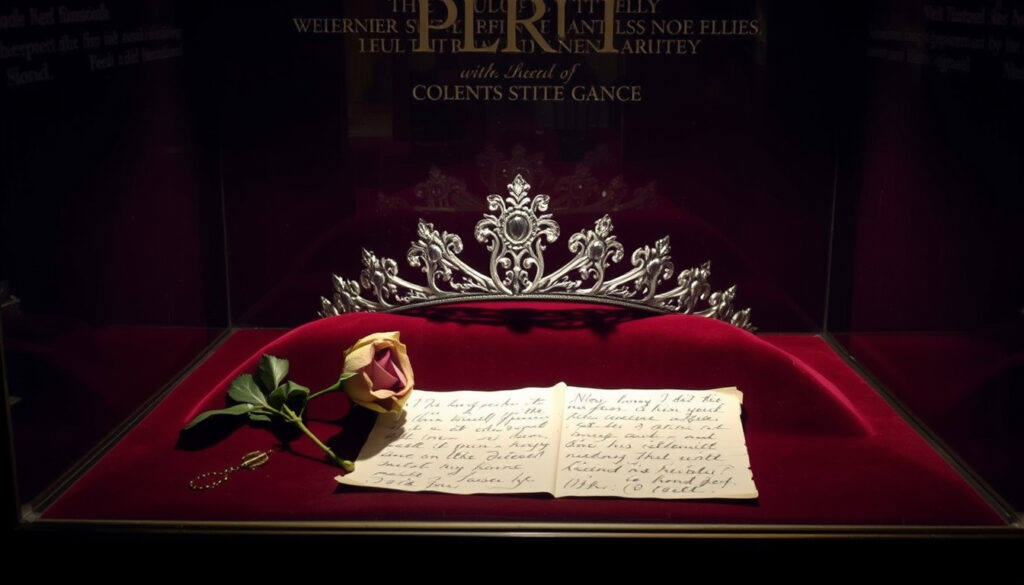
Diana, Princess of Wales: Mysteries That Remain
Twenty-seven years after her death, Diana, Princess of Wales, remains one of the most photographed and talked-about women in modern history. Yet for all the headlines, some of the most basic questions about her final moments, her loves, and the royal family’s response still lack clear answers.
Born: 1 July 1961 · Died: 31 August 1997 · Age at death: 36 · Children: Prince William and Prince Harry · Spouse: Charles, Prince of Wales (1981–1996)
Quick snapshot
- Diana died on 31 August 1997 in Paris from injuries sustained in a car crash (Wikipedia)
- The crash occurred in the Pont de l’Alma tunnel (Wikipedia)
- A 2008 inquest returned a verdict of unlawful killing (Wikipedia)
- Henri Paul’s drink-driving and the paparazzi pursuit were cited as contributing factors (BBC News)
- Exact last words spoken by Diana
- Who was her true love at the time of death
- Whether she was conscious after the crash
- The precise sequence of events in the tunnel leading to the crash
- Crash at 12:23 a.m. on 31 August 1997 (Wikipedia)
- Pronounced dead at 4:00 a.m. at Pitié-Salpêtrière Hospital (BBC News)
- Official inquest opened 2 October 2007, concluded 7 April 2008 (IALS official inquest resource)
- Official investigations are closed; no further inquests are planned (Operation Paget)
- Conspiracy theories persist despite multiple inquiries finding no evidence of foul play (Operation Paget)
- Diana’s legacy continues through her sons’ humanitarian work (Operation Paget)
Seven key facts about Diana, Princess of Wales — from birth through her humanitarian legacy — form the backbone of her story.
| Attribute | Detail |
|---|---|
| Full Name | Diana Frances Spencer |
| Born | 1 July 1961, Norfolk, England |
| Died | 31 August 1997, Paris, France |
| Spouse | Charles, Prince of Wales (m. 1981; div. 1996) |
| Children | Prince William, Prince Harry |
| Occupation | Humanitarian, British royal |
| Notable Work | Campaign against landmines, HIV/AIDS awareness |
What were Diana’s last words before she died?
The question of Diana’s final words has been the subject of intense speculation for more than two decades. The most widely circulated account comes from a witness at the crash scene who reported hearing her say, “My God, what happened?” — but no official record confirms this with certainty.
What happened in the final moments of Diana’s accident?
The crash occurred at approximately 12:23 a.m. on 31 August 1997 in the Pont de l’Alma tunnel in Paris (Wikipedia). The Mercedes S280 carrying Diana, Dodi Fayed, and driver Henri Paul slammed into the 13th pillar of the tunnel. Emergency services arrived within minutes.
Who was with Diana when she died?
The car carried four people: Diana, Dodi Fayed, Henri Paul (driver), and Trevor Rees-Jones (bodyguard). Dodi Fayed and Henri Paul died at the scene. Trevor Rees-Jones survived with serious injuries. Diana was alive when paramedics arrived and was extracted from the wreckage.
Despite decades of investigation and 250 witnesses heard during the inquest (BBC News), no single authoritative source has ever confirmed Diana’s exact last words. The witness account remains the closest we have.
Only one person in the vehicle who could have heard Diana’s final words — Trevor Rees-Jones — survived, and he has stated he remembers nothing from the crash itself. The witness who reported “My God, what happened?” was approached by a journalist days later and never testified under oath.
The implication: Without a credible witness under oath, Diana’s final words are likely to remain part of the enduring mystery surrounding her death.
Who was Princess Diana’s true love?
Diana’s romantic life was pursued relentlessly by the press, and the question of her true love has no single settled answer. The evidence points to multiple significant relationships, each with its own context.
Who was Diana in love with when she died?
At the time of her death, Diana was in a romantic relationship with Dodi Fayed, the son of Egyptian billionaire Mohamed Al-Fayed. They had been vacationing together in the South of France and were returning to Paris from Sardinia on the day of the crash.
Was Dodi Fayed Diana’s true love?
The relationship with Dodi was relatively brief — they had been seeing each other for only about two months. Close friends of Diana have described it more as a summer romance than a deep, lasting love. Diana had also been involved with heart surgeon Hasnat Khan, whom she reportedly referred to as “the love of her life” in conversations with friends.
How did Diana’s relationship with Charles end?
Diana’s marriage to Prince Charles ended in divorce on 28 August 1996 (Wikipedia). Both parties admitted to affairs during the marriage — Charles with Camilla Parker Bowles, Diana with James Hewitt. In her 1995 Panorama interview, Diana famously said of her marriage, “There were three of us in this marriage, so it was a bit crowded.”
The romantic loyalty narrative demands a single “true love,” but Diana’s life suggests something more human — she loved differently at different times. James Hewitt was described by Diana as “a true love” in private letters. Hasnat Khan was reportedly the man she wanted to marry after her divorce. Dodi was the man she was with when she died.
Which royal refused to go to Diana’s funeral?
The royal family’s response to Diana’s death remains one of the most intensely debated episodes in modern British history. The core tension: who attended and who stayed away.
Why did the Queen not attend Diana’s funeral?
Queen Elizabeth II did not attend the funeral service at Westminster Abbey on 6 September 1997. The Queen remained at Balmoral Castle in Scotland with Princes William and Harry in the days immediately following Diana’s death. The decision was widely criticized by the public and the press, leading to what some historians have called the greatest crisis of the Queen’s reign.
Who from the royal family did attend?
Prince Charles, Princes William (then 15) and Harry (then 12) attended the funeral. Also present were Queen Elizabeth The Queen Mother, Princess Margaret, and other senior royals. Prince Philip attended the funeral as well.
What was the public reaction to the royal family’s absence?
The public response was swift and unforgiving. Newspapers ran headlines like “Where is our Queen?” and “Show us you care.” The pressure became so intense that the Queen broke with protocol and delivered a live television address to the nation on 5 September 1997, paying tribute to Diana as “an exceptional and gifted human being.”
The Queen’s initial absence was not a refusal to attend the funeral itself but a decision to remain in seclusion with her grandsons. Yet the public interpreted it as cold indifference, and the incident reshaped the monarchy’s relationship with the British people.
The Queen, who had never given a live televised address about a private matter, was forced to do so precisely because she had stayed away. The monarchy learned a hard lesson: in the age of 24-hour news, silence is interpreted as guilt.
Did Charles cry when Diana died?
Prince Charles’s emotional response to Diana’s death has been the subject of persistent public curiosity, fueled by the fraught history of their marriage.
How did Prince Charles react to Diana’s death?
Prince Charles was visibly emotional during the funeral procession. Photographs from the day show him with a composed but pained expression. Close aides later reported that Charles wept privately. In a documentary broadcast years later, Charles’s biographer Jonathan Dimbleby stated that Charles was “deeply affected” by Diana’s death.
Was Charles unfaithful to Diana first?
This question has no clear answer because both parties gave conflicting accounts. Diana, in her Panorama interview, suggested that Charles’s relationship with Camilla Parker Bowles predated the marriage’s breakdown. Charles, through his authorized biography by Jonathan Dimbleby, stated that the marriage was irreparably broken before he resumed his relationship with Camilla.
Both Charles and Diana admitted to affairs in their marriage. The “who was first” question is essentially unresolvable without a credible third-party witness — and neither party’s account is universally accepted.
How long was Diana alive after the accident?
The timeline of Diana’s medical care after the crash is one of the most precisely documented yet persistently questioned elements of the case.
What time did the accident happen?
The crash occurred at approximately 12:23 a.m. on 31 August 1997 (Wikipedia). The Mercedes struck the 13th pillar of the Pont de l’Alma tunnel at high speed.
When was Diana pronounced dead?
Diana was pronounced dead at 4:00 a.m. at Pitié-Salpêtrière Hospital, approximately three and a half hours after the crash. She had been extracted from the wreckage by emergency services and transported to the hospital, where doctors attempted emergency surgery.
What were the immediate medical responses?
Paramedics arrived within minutes of the crash. Diana had suffered a major chest injury and internal bleeding. She was conscious at the scene but went into cardiac arrest at the hospital. Doctors performed an emergency thoracotomy to try to repair the damage, but the injuries were too severe (BBC News).
The three-and-a-half-hour gap between crash and death declaration has fueled conspiracy theories about whether Diana could have been saved with faster transport or different medical decisions. The 2008 inquest heard expert testimony that her injuries were unsurvivable regardless of treatment timing.
Timeline of Diana, Princess of Wales
Diana Frances Spencer born in Norfolk, England
Becomes Lady Diana Spencer after father inherits title
Marries Prince Charles at St Paul’s Cathedral
Birth of Prince William
Birth of Prince Harry
Separates from Prince Charles
Gives Panorama interview
Divorce from Prince Charles finalized
Dies in car crash in Paris
Funeral at Westminster Abbey
Confirmed facts and what remains uncertain
What is established
- Diana’s birth and death dates are officially recorded — 1 July 1961 to 31 August 1997
- Her marriage to Prince Charles (29 July 1981) and divorce (28 August 1996) are a matter of public record
- She had two sons: Prince William (born 21 June 1982) and Prince Harry (born 15 September 1984)
- Her humanitarian work, including the campaign against landmines in Angola in January 1997, is well-documented (Wikipedia)
- The inquest verdict of unlawful killing was delivered by a 10-person jury on 7 April 2008, finding gross negligence by Henri Paul and the pursuing paparazzi (BBC News)
What remains unresolved
- Diana’s exact last words — the witness account of “My God, what happened?” has never been confirmed under oath
- Who was her “true love” — evidence points to multiple candidates (Dodi Fayed, Hasnat Khan, James Hewitt) with no consensus
- Whether she was conscious after the crash — accounts vary among witnesses and medical responders
- The precise sequence of events in the tunnel — the exact cause of the collision with the 13th pillar has been reconstructed but not definitively determined
“There were three of us in this marriage, so it was a bit crowded.”
— Diana, Princess of Wales, Panorama interview, 1995
“She was an exceptional and gifted human being. In good times and bad, she never lost her capacity to smile and laugh, nor to inspire others with her warmth and kindness.”
— Queen Elizabeth II, televised address, 5 September 1997 (BBC News)
“My God, what happened?”
— Reported last words of Diana, attributed to a witness at the crash scene
For the British public and the global audience that mourned Diana, the implications are clear: official investigations have closed the door on conspiracy, but emotional questions — about love, loyalty, and a life cut short — remain open. The public must decide whether to accept the official record or continue searching for answers that may never come.
reuters.com, telegraph.co.uk, independent.co.uk, en.wikipedia.org, accesstolaw.com, cbsnews.com, youtube.com
Frequently asked questions
Where was Princess Diana born?
Diana Frances Spencer was born on 1 July 1961 at Park House, Sandringham, Norfolk, England (Wikipedia).
How old was Diana when she died?
Diana was 36 years old at the time of her death on 31 August 1997.
Who were Diana’s siblings?
Diana had two older sisters, Sarah and Jane, and a younger brother, Charles. She also had a brother, John, who died shortly after birth in 1960.
What was the cause of Princess Diana’s death?
The official cause of death was injuries sustained in a car crash in the Pont de l’Alma tunnel in Paris. The 2008 inquest returned a verdict of unlawful killing, attributing the crash to grossly negligent driving by Henri Paul and the pursuing paparazzi (Wikipedia).
Did Diana have any affairs?
Diana admitted to an affair with James Hewitt, a former army officer, during her marriage to Prince Charles. The relationship was revealed after their separation.
What charities did Diana support?
Diana was patron of over 100 charities. Her most notable causes included the campaign against landmines, HIV/AIDS awareness and destigmatization, and support for homeless youth and cancer patients (Wikipedia).
Who was the driver of the car?
The driver of the Mercedes S280 was Henri Paul, the deputy head of security at the Hôtel Ritz in Paris. Paul died at the scene of the crash. The inquest found that he had consumed alcohol and prescription drugs before driving (BBC News).
What is the Diana, Princess of Wales Memorial?
The Diana, Princess of Wales Memorial Fountain opened in Hyde Park, London, on 6 July 2004. The Diana Award, established in her memory, recognizes young people’s humanitarian work. Her legacy is also carried forward by her sons, Princes William and Harry.
More related posts
 400 AUD to NZD: Live Rate & Best Exchange Tips
 Agriculture Tools in Bhuj: Best Dealers & Contacts
 Ranfurly Shield Game Today: Current Holder, Score & How to Watch
 Australian Dollar to NZ Dollar Exchange Rate Guide
 Best Home Loan Rates NZ – Lowest Fixed and Floating Deals
 Christchurch Family Lotto Winner – Claims $30M Powerball Prize
 RV Super Centre Christchurch | Motorhomes, Sales & Service in Christchurch
 Translate French to English: Free Tools for Text, Audio & Camera