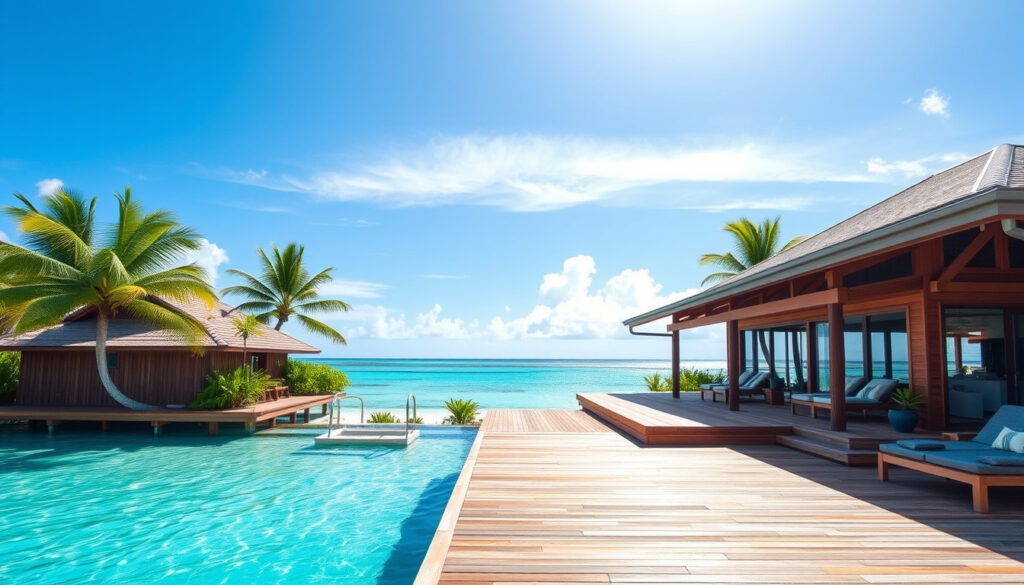
Book a Bach Rarotonga: Complete Holiday Home Guide
Few places feel as close to home yet as far away as Rarotonga does for New Zealanders — just four hours away with the same currency and power plugs, but a completely different pace of life. This guide covers when to go, where to stay, and how to book a bach with confidence.
Flight time from NZ: 3.5–4 hours ·
Currency: New Zealand Dollar (NZD) ·
Peak season: June to August ·
Inhabited islands: 15 ·
Population of Rarotonga: approx. 13,000 ·
Official languages: English and Cook Islands Māori
Quick snapshot
- Dry season: May–Oct (BestTimesToVisit)
- Peak: June–Aug (Te Vakaroa Villas)
- Off-peak: Nov–Apr (Te Vakaroa Villas)
- Accommodation: NZD 150–600/night (Holiday Houses NZ)
- Meals: NZD 20–50 per person (Holiday Houses NZ)
- Transport: NZD 60–100/day car rental (Holiday Houses NZ)
- Muri Beach – family-friendly (Holiday Houses NZ)
- Avarua – central (Holiday Houses NZ)
- Titikaveka – quiet (Holiday Houses NZ)
- Lagoon: safe for all ages (Jon is Travelling)
- Ocean side: dangerous currents (Jon is Travelling)
- Lifeguards at Muri Beach (Jon is Travelling)
| Detail | Value |
|---|---|
| Flight time from Auckland | 3.5–4 hours |
| Time zone | UTC-10 (no daylight saving) |
| Visa requirement for NZ citizens | None (up to 31 days) |
| Electricity | 240V, same as NZ |
| Emergency number | 999 |
What is the best month to go to Rarotonga from NZ?
Dry season vs wet season
- May to October is the dry season, with lower humidity and less rain (BestTimesToVisit).
- November to April is the wet season, with warmer temperatures and intermittent showers (Te Vakaroa Villas).
- The dry season is widely recommended for first-time visitors because of comfortable conditions for outdoor activities (Whimsy Soul).
Peak vs off-peak months
- June to August is peak tourist season, with higher accommodation prices and more crowds (Whimsy Soul).
- March is the low season and November offers deals (KAYAK).
- March to April is sea turtle nesting season, a popular time for wildlife viewing.
Peak season (June–August) delivers perfect weather but prices can jump 30–50% on bach rentals. Off-peak travellers save money but risk rain — and the occasional cyclone between January and March.
Is Rarotonga cheaper than New Zealand?
Accommodation costs
- Muri Beach bach rentals on Holiday Houses NZ range from about NZ$260 to NZ$1,100 per night (Holiday Houses NZ).
- Muri Beachcomber lists a Garden Unit at NZ$440 per night and a Watergarden Villa at NZ$610 per night (Muri Beachcomber).
- Trivago’s Muri hotel comparison shows prices starting from NZ$368 across 7 booking sites (Trivago).
Food and dining
- Dining at local markets and food stalls can be affordable, with meals from NZD 15–25.
- Restaurant dining runs NZD 20–50 per person for a main course.
- Imported groceries are noticeably more expensive than in New Zealand due to shipping costs.
Transportation and activities
- Car rental costs NZD 60–100 per day, comparable to New Zealand rates.
- Snorkelling and beach access are free, but guided tours and boat trips add up.
- Overall, Rarotonga is generally more expensive than New Zealand for imported goods and accommodation.
Which part of Rarotonga is best to stay in?
Muri Beach – best for families and activities
- Muri Beach is the most popular area, with many baches, restaurants, and water sports.
- Tripadvisor identifies 18 accommodations in Muri, with prices starting from AU$177 (Tripadvisor Australia).
- Muri Beachcomber’s Family Garden Unit costs NZ$720 per night for four people (Muri Beachcomber).
Avarua – best for convenience and nightlife
- Avarua is the main town with shops, cafes, and the airport a short drive away.
- It offers the most dining and nightlife options on the island.
- Accommodation here tends to be more budget-friendly than Muri Beach.
Titikaveka – best for quiet and relaxation
- Titikaveka offers a quieter, more local experience with fewer tourists.
- Its lagoon is excellent for swimming and kayaking.
- Bach rentals here are often more affordable than Muri Beach.
Arorangi – best for sunset views
- Arorangi, on the west coast, is known for stunning sunsets and fewer crowds.
- It has a more relaxed, laid-back vibe.
- Accommodation options include a mix of baches and small resorts.
For New Zealanders booking a bach, the decision is simple: Muri Beach if you want the full Rarotonga experience, Titikaveka or Arorangi if you want to prioritise peace and sunset views over convenience.
How many days is enough in Rarotonga?
Lagoon safety
- Swimming in the lagoon is generally safe for all ages, with calm, shallow water.
- Muri Beach lagoon and Aitutaki lagoon are the safest and most popular swimming spots.
- The lagoon is sheltered by the reef, so there are no strong waves or currents.
Ocean currents and reef breaks
- Ocean side swimming can be dangerous due to strong currents and reef breaks.
- Rip currents are common on the exposed side of the island.
- Always swim in marked areas and heed local advice.
Best beaches for swimming
- Muri Beach: lifeguards on duty, calm lagoon, excellent for families.
- Titikaveka Beach: quiet, clear water, great for snorkelling.
- Aroa Beach: safe lagoon swimming with a marine reserve nearby.
Is it safe to swim in Rarotonga?
Lagoon safety
- Swimming in the lagoon is generally safe for all ages, with calm, shallow water.
- Muri Beach lagoon and Aitutaki lagoon are the safest and most popular swimming spots.
- The lagoon is sheltered by the reef, so there are no strong waves or currents.
Ocean currents and reef breaks
- Ocean side swimming can be dangerous due to strong currents and reef breaks.
- Rip currents are common on the exposed side of the island.
- Always swim in marked areas and heed local advice.
Best beaches for swimming
- Muri Beach: lifeguards on duty, calm lagoon, excellent for families.
- Titikaveka Beach: quiet, clear water, great for snorkelling.
- Aroa Beach: safe lagoon swimming with a marine reserve nearby.
Rarotonga vs Fiji: comparison
Four destinations, one pattern: Rarotonga wins on convenience for New Zealanders; Fiji wins on scale and variety.
| Factor | Rarotonga | Fiji |
|---|---|---|
| Flight time from Auckland | 3.5–4 hours | 3–3.5 hours |
| Visa for NZ citizens | None (up to 31 days) | None (up to 4 months) |
| Currency | NZD (same as New Zealand) | Fijian Dollar (FJD) |
| Island scale | Small, easy to explore | Large, multiple island groups |
| Bach culture | Strong, many holiday homes | Resort-focused, fewer baches |
| Best for | Short, easy getaways | Longer, multi-island holidays |
Timeline signal
Understanding the seasonal patterns helps in planning.
| Period | What’s happening |
|---|---|
| May–October | Dry season – best weather for travel (BestTimesToVisit) |
| June–August | Peak tourist season – higher prices, busy (Whimsy Soul) |
| November–April | Wet season – lower prices, potential rain and cyclones (Te Vakaroa Villas) |
| March–April | Sea turtle nesting season – popular for wildlife viewing (Jon is Travelling) |
Clarity section
Confirmed facts
- Rarotonga is a safe destination for swimming in lagoons.
- The currency is the New Zealand Dollar.
- No visa is needed for New Zealand citizens for stays up to 31 days.
- Muri Beach has lifeguards on duty.
- Emergency number is 999.
What’s unclear
- Exact cost of a bach varies widely by season and location.
- Whether Rarotonga is cheaper than Fiji depends on travel style and season.
- Availability of pet-friendly baches is not consistently listed on booking platforms.
- Exact cancellation policies for baches are not standardized.
- Reliability of Wi-Fi speeds in baches is not guaranteed.
Quotes from the experts
“The dry season from May to October offers the most reliable weather for visitors, with lower humidity and plenty of sunshine.”
— Cook Islands Tourism official, on peak season recommendations
“Muri Beach is consistently the most booked area for baches because of the lagoon and the proximity to restaurants and water sports.”
— Local bach owner, on booking trends and popular areas
“Pack for humidity and sun, but bring a light jacket for the evenings — especially if you’re visiting between June and August.”
— AA Travel, on packing and travel tips for Rarotonga
Summary
Booking a bach in Rarotonga is straightforward once you understand the trade-offs: peak season (June–August) delivers perfect weather but higher prices; off-peak (November–April) saves money but carries rain risk. Muri Beach remains the best choice for families and first-timers, while Titikaveka and Arorangi reward those seeking quiet. For New Zealanders, the choice is clear: book a 7-day bach in the dry season, lock in a Muri Beach location for convenience, and save money by travelling in March or November if your schedule allows.
Related reading: Holiday Houses NZ – Rarotonga/Muri accommodation
For those familiar with the process of booking a bach in Queenstown, the Rarotonga rental market follows a similar structure but with island-specific considerations like cyclone season and limited availability.
Frequently asked questions
How do I book a bach in Rarotonga?
Use holiday rental platforms like Holiday Houses NZ, RentRaro, or local bach booking sites. Many owners also list on Airbnb and FlipKey. Direct booking with the owner can sometimes secure better rates.
What is the cancellation policy for baches in Rarotonga?
Cancellation policies vary by owner. Most require 14–30 days’ notice for a full refund. Always read the policy before booking, and consider travel insurance.
Are there pet-friendly baches in Rarotonga?
Some baches allow pets, but availability is limited. Filter by pet-friendly options on booking platforms, or contact the owner directly. Quarantine laws apply for bringing pets into the Cook Islands.
Do I need travel insurance for Rarotonga?
Travel insurance is strongly recommended. It covers medical expenses, trip cancellation, and lost luggage. New Zealanders should check if their policy covers the Cook Islands.
What should I pack for a trip to Rarotonga?
Pack light clothing, swimwear, reef-safe sunscreen, insect repellent, a light jacket for evenings, and comfortable walking shoes. The power voltage is 240V, same as New Zealand.
Can I pay with New Zealand credit cards in Rarotonga?
Yes, New Zealand credit cards and debit cards are widely accepted. ATMs are available in Avarua. Cash is useful for markets and small vendors.
Is there Wi-Fi available in baches?
Most baches offer Wi-Fi, but speeds can be slower than in New Zealand. Some baches have limited data caps. Check with the owner before booking if reliable internet is important.
More related posts
 Bed Bath and Beyond Tauranga – Location, Hours & Sales
 Newcastle United vs Arsenal FC Lineups: Confirmed 1-0 Result
 Wet Weather Gear NZ: Best Brands, Stockists & Buying Guide
 Word Finder with Letters: How to Use It
 Remote Control Boat NZ: Prices, Best Models for Adults
 Earn Money Online NZ: Real Ways to Make Income from Home
 Jacqui and Clint MAFS: Still Together? Wedding & Updates