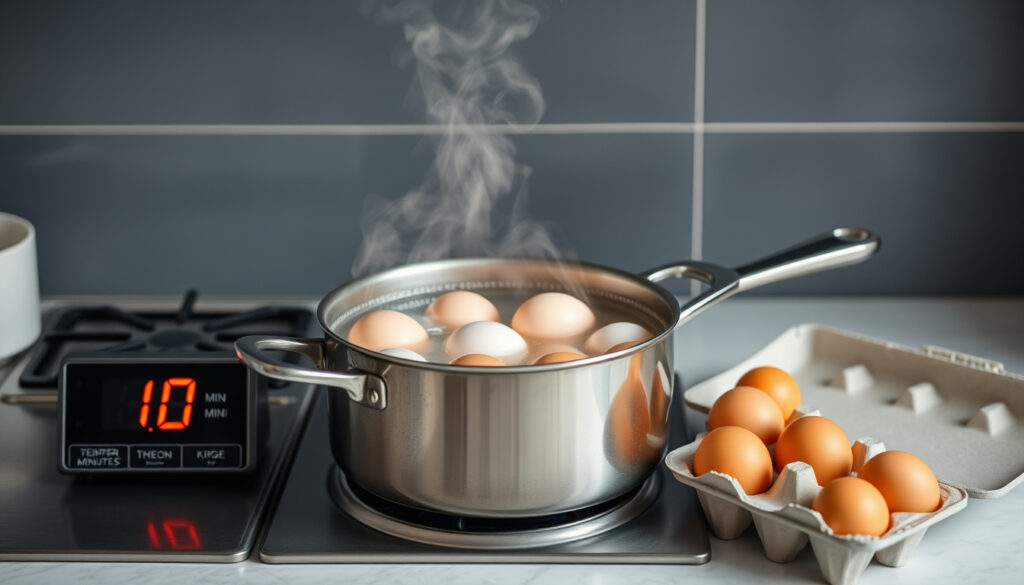
How Long to Hard Boil an Egg – Perfect Times by Size and Method
Perfect hard boiled eggs begin with understanding one simple truth: timing determines everything. Whether preparing eggs for salads, deviled dishes, or a quick protein-rich snack, the difference between a creamy yolk and a chalky, overcooked result often comes down to just a few minutes on the stovetop.
The most reliable method involves starting eggs in cold water, bringing them to a rolling boil, then removing the pot from heat to let them stand covered. This approach gives the eggs gentle, even heat distribution that prevents the rubbery texture and unsightly green rings that plague many home-cooked hard boiled eggs.
Understanding how your stovetop, altitude, and egg size interact helps adjust timing accordingly. While guidelines provide a solid starting point, small tweaks based on your specific conditions often make the difference between good and truly perfect results.
How Long Does It Take to Hard Boil an Egg?
- Large eggs require 10 to 12 minutes from the moment the water reaches a rolling boil
- Medium eggs cook faster at approximately 9 minutes total
- Extra large eggs need around 15 minutes to cook through evenly
- The ideal doneness depends on personal preference: creamy yolks at 10 minutes, firmer yolks at 12 minutes
- Egg white proteins begin setting at 144 to 149°F, while yolk proteins need 158 to 165°F
- Residual heat after removing from heat continues cooking the eggs gently
- Overcooking triggers a chemical reaction creating iron sulfide that produces the green ring around yolks
| Egg Size | Cold Water Start | Boiling Water Start | Notes |
|---|---|---|---|
| Medium | 9 minutes | 9 minutes | Firm whites and fully set yolks |
| Large | 10-12 minutes | 10-12 minutes | 10 min for vibrant yolks; 12 min for opaque texture |
| Extra Large | 15 minutes | 15 minutes | Ensures complete cooking throughout |
| Small | 8 minutes | 8 minutes | Quick cooking; watch closely |
Standard sea-level boiling methods work well at most elevations. While water boils at slightly lower temperatures at high altitude, the residual heat cooking method compensates effectively. No significant timing adjustments are typically needed.
Boiling Eggs from Cold Water vs Boiling Water
The Cold Water Method
The cold water method places eggs in a pot in a single layer, covered by 1 to 2 inches of cold water. The pot is then brought to a full rolling boil over high heat before covering and removing from the burner entirely. Eggs finish cooking during the standing time.
This approach offers several distinct advantages. The gradual temperature increase reduces thermal shock stress on the eggshells, which means fewer cracks during cooking. More importantly, the gentle transition from cold to hot prevents the violent cell disruption that leads to tough, rubbery egg whites. According to Incredible Egg, this method is widely recommended by cooking educators because it delivers consistent results with minimal risk of overcooking.
The Boiling Water Method
The boiling water technique requires bringing water to a full boil first, then carefully lowering eggs into the pot using tongs. The heat is immediately reduced to a gentle simmer, and eggs cook for the specified time before transfer to an ice bath.
This method carries higher risk of shell cracking due to the temperature differential between the boiling water and cool eggs. However, some cooks prefer it when they need to prepare eggs quickly, as it eliminates the initial heating phase. The Chopping Block notes that this approach works best when eggs are lowered gently and the water temperature is maintained at a gentle simmer rather than a vigorous boil.
Comparing the Two Approaches
Both methods can produce excellent hard boiled eggs when executed properly. The cold water start remains the preferred choice for most situations because it provides more forgiveness in timing and produces fewer damaged shells. The boiling water method suits experienced cooks who want faster overall preparation time and are comfortable handling eggs carefully as they enter the pot.
The cold water start is gentler on the eggs and reduces the chance of cracks. Once the water reaches a boil, the residual heat does the work.
How to Tell When Hard Boiled Eggs Are Done
The Spin Test
One reliable method for checking doneness involves spinning the egg on a flat surface. A properly hard boiled egg spins smoothly and evenly because the solid yolk remains centered. A raw egg wobbles and spins unevenly due to the liquid yolk shifting inside. This test works well when uncertainty exists about cooking time.
Visual and Tactile Indicators
Cutting an egg in half provides the most definitive check. The yolk should appear completely opaque and set throughout. Any visible runniness or a yolk that jiggles indicates insufficient cooking time. For those who prefer a slightly softer center, removing eggs a minute or two before the full recommended time and allowing residual heat to finish cooking offers a middle ground.
The Ice Bath Connection
Regardless of which doneness test you use, immediately transferring cooked eggs to an ice bath halts the cooking process completely. This thermal shock causes the egg white to contract and pull away from the inner membrane, making subsequent peeling significantly easier. Eggs should rest in the ice bath for at least 10 to 15 minutes, with some sources recommending a minimum of 14 minutes for optimal peeling results.
Tips for Easy Peeling and High Altitude Adjustments
Egg Age Matters
Fresh eggs prove notoriously difficult to peel cleanly. The membrane beneath the shell adheres strongly to the fresh egg white, tearing chunks away during removal. Purchasing eggs 7 to 10 days before cooking dramatically improves peeling success. As eggs age, carbon dioxide escapes through the shell pores, raising the internal pH and causing the membrane to lose its grip on the egg white.
Tap the egg firmly on a countertop to crack the shell all over. Roll gently between your palms to loosen the membrane, then peel under cold running water, starting at the large end where the air pocket provides a natural starting point.
Altitude Considerations
While high altitude affects boiling temperatures, hard boiled eggs remain relatively forgiving. Water boils at slightly lower temperatures at elevation, but the residual heat method works well because the eggs are not actually boiling during the critical standing phase. Most sources, including Love and Lemons, confirm that standard timing applies across most elevations without modification.
Shell Handling Precautions
Never pierce egg shells before cooking. This practice introduces bacteria through the tiny cracks and compromises food safety. Additionally, cracked shells during cooking allow egg white to leak into the water, creating a mess and potentially affecting cooking consistency. If cracks appear during boiling, transfer the egg immediately to an ice bath to minimize further damage.
Never microwave eggs in their shells. Rapid steam buildup inside the sealed shell causes violent explosions. Even peeled eggs or eggs punctured before microwaving present serious burn risks and should be avoided entirely. For more information on achieving the perfect hard-boiled egg, check out this Good internet speed explained.
The Step-by-Step Process
Following a consistent process eliminates guesswork and produces reliable results batch after batch. The sequence matters less than paying attention to timing and temperature transitions.
- Prepare: Place eggs in a single layer at the bottom of a pot suitable for the quantity. Using a pot that accommodates eggs without crowding ensures even heating.
- Cover: Add cold water to a level 1 to 2 inches above the eggs. The additional water buffer ensures complete submersion even as the water level shifts during heating.
- Heat: Bring the pot to a full rolling boil over high heat. A rolling boil features vigorous, continuous bubbling across the entire surface.
- Time: Immediately remove the pot from heat and cover tightly. Set a timer for the appropriate duration based on egg size and desired doneness.
- Cool: Prepare an ice bath while eggs cook. When the timer sounds, transfer eggs immediately to the ice bath using a slotted spoon.
- Rest: Allow eggs to cool in the ice bath for at least 10 to 15 minutes. This resting period proves essential for both peeling ease and yolk quality.
- Peel: Remove eggs from the ice bath and peel under cool running water. Refrigerate immediately if not serving right away.
What We Know and What Remains Uncertain
| Established Information | Variables That Affect Results |
|---|---|
| Large eggs need 10-12 minutes | Exact timing varies by stove heat intensity |
| Ice bath improves peeling | Freshness level of individual eggs |
| Cold water method reduces cracking | Shell thickness varies between brands |
| Green rings indicate overcooking | Altitude effects on specific cookware |
| Storage life is approximately one week in shell | Personal texture preferences |
No single cooking time produces universally perfect hard boiled eggs. Factors including egg freshness, shell thickness, initial temperature, and stove type all influence the final result. Testing a few eggs initially helps calibrate timing for your specific conditions.
Understanding the Science Behind Perfect Timing
Egg coagulation temperatures explain why timing proves so critical. Egg white proteins begin setting between 144 and 149°F, while yolk proteins require the higher range of 158 to 165°F. The residual heat cooking method achieves these temperatures without maintaining a boiling pot, preventing the overcooking that leads to tough textures.
The greenish discoloration sometimes seen around yolk edges results from iron and sulfur compounds reacting during extended high-heat exposure. While harmless, this effect signals that cooking time exceeded ideal parameters. The ice bath prevents this reaction by rapidly cooling the egg below the threshold where the chemical process occurs.
Safety Standards and Source Guidance
Cook eggs until both the white and yolk are firm. Refrigerate promptly after cooking and maintain cold temperatures throughout storage.
Food safety organizations emphasize proper handling throughout the hard boiling process. The FDA provides guidelines on egg safety covering refrigeration requirements and preparation practices that minimize bacterial risks.
Eggs should be cooked promptly after purchase and refrigerated immediately after boiling. The National Center for Home Food Preservation recommends using eggs within three weeks of purchase for best quality, though properly refrigerated hard boiled eggs remain safe for approximately one week in their shells.
Summary and Next Steps
Mastering hard boiled eggs comes down to understanding that timing varies by size, method, and personal preference. Large eggs from cold water require 10 to 12 minutes for fully set yolks. The cold water starting method reduces cracking, while the ice bath ensures easy peeling and prevents overcooking. Older eggs peel more easily, and storage in the refrigerator maintains quality for up to one week when kept in their shells.
Armed with these fundamentals, preparing perfect hard boiled eggs becomes a repeatable process rather than a gamble. Small adjustments based on your specific eggs and equipment yield increasingly consistent results over time.
For expanding egg preparation skills, understanding the Life Cycle of a Butterfly – 4 Stages From Egg to Adult provides fascinating context about egg development. Similarly, exploring Rice Water for Hair – Benefits, Recipe and How to Use offers additional cooking and kitchen skill development opportunities.
Frequently Asked Questions
Can you hard boil eggs in the microwave?
Microwaving eggs in their shells is dangerous. Steam buildup inside the shell can cause the egg to explode. For safety, always use stovetop methods to hard boil eggs.
How long do hard boiled eggs last?
Hard boiled eggs in their shells keep for about one week in the refrigerator. Once peeled, they should be consumed the same day for best quality and safety.
How long should you boil a large egg for hard boiled?
Large eggs typically need 10 to 12 minutes when using the cold water method. Ten minutes produces a creamy yolk, while 12 minutes yields an opaque, firmer yolk.
Why should eggs rest in an ice bath after boiling?
An ice bath stops the cooking process immediately and causes the egg white to contract away from the shell. This makes peeling easier and prevents the unattractive green ring from forming around the yolk.
Do older eggs peel more easily?
Yes. Eggs that are 7 to 10 days old peel more easily than fresh ones. As eggs age, carbon dioxide escapes through the shell, raising the pH and weakening the membrane’s adhesion to the shell.
More related posts
 FreshChoice Pyes Pa: Store Hours, Services, and Owner Info
 Cash for Cars Dunedin: Who Pays Most? Sell Fast for Top Dollar
 Star of the Seas: Size, Features, Cost & Family Tips (2025)
 National Aquarium of New Zealand: Tickets, Hours & Highlights
 Civil Engineer Salary in NZ: Averages by Experience
 Mission Heights Primary School: Principal, Enrollment, Decile
 South Africa National Cricket Team: Players & Controversies