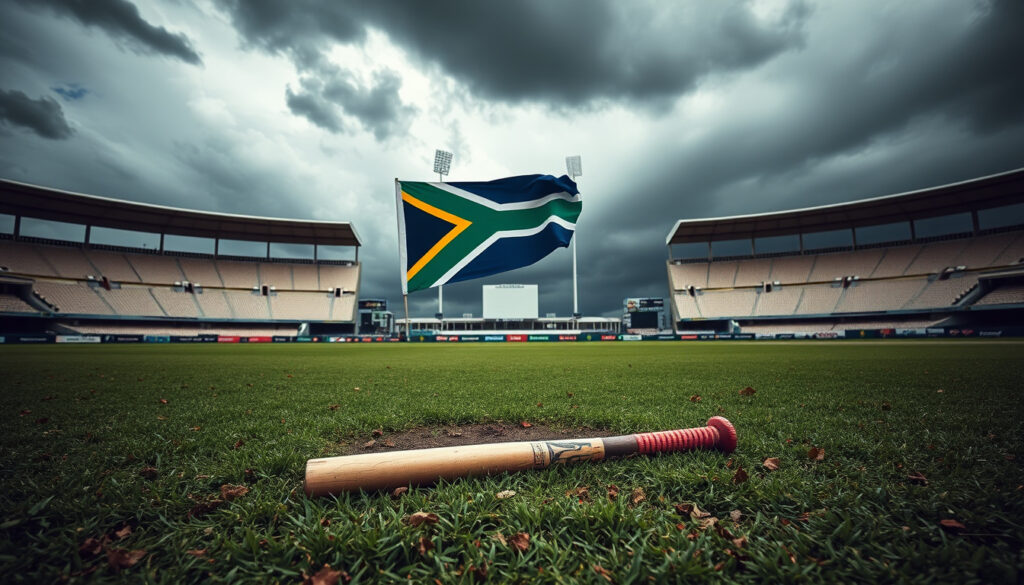
South Africa National Cricket Team: Players & Controversies
South African cricket has always felt like a story bigger than the game itself. Between the brilliance of players like Jacques Kallis and the unresolved controversies over transformation policies, there’s a team that has reached the World Cup semi-finals five times without ever lifting the trophy – a record that reflects both talent and heartbreak. This article lays out the key facts, from the six‑player rule to the SA20 league, and examines what really defines the Proteas today.
Nickname: Proteas ·
First Test: 1889 ·
ICC Test ranking (2025): 6th ·
World Cup best: Semi‑finals (5 times) ·
Current Test captain: Temba Bavuma ·
SA20 launch: 2023
Quick snapshot
- Banned from 1970 to 1991 (Wikipedia – encyclopedic overview)
- Kallis is the all‑time leading Test run‑scorer and wicket‑taker (Wikipedia – Jacques Kallis bio)
- Rabada served a one‑match doping ban in 2018 (ESPNcricinfo – sports news)
- Hansie Cronje died in a plane crash on June 1, 2002 (Wikipedia – Hansie Cronje article)
- Exact future of transformation policy requirements (ESPNcricinfo – policy reporting)
- Whether any SA20 franchise ownership will change (ESPNcricinfo – SA20 coverage)
- Long‑term impact of drug bans on players’ careers (Wikipedia – Kagiso Rabada page)
- 1889 – first Test (Wikipedia – team history)
- 1970 – banned from international cricket (Wikipedia – team history)
- 2002 – Hansie Cronje killed in crash (Wikipedia – Hansie Cronje)
- 2023 – SA20 launched (ESPNcricinfo – SA20 background)
- DEI indaba aiming for demographically reflective team by 2027 World Cup (ESPNcricinfo – DEI update)
- SA20 likely to expand with new franchises (ESPNcricinfo – league growth)
Of the 14 teams that have competed in Test cricket, South Africa holds a distinctive place – both for its on‑field achievements and for the political forces that have shaped its path.
The table below lays out the team’s core identity and competitive standing.
| Attribute | Value |
|---|---|
| Full name | South Africa men’s national cricket team |
| Nickname | Proteas |
| Association | Cricket South Africa |
| Current Test captain | Temba Bavuma |
| Current ODI captain | Temba Bavuma |
| Current T20I captain | Aiden Markram |
| ICC Test ranking | 6th (as of 2025) |
| World Cup best | Semi‑finals (1992, 1999, 2007, 2015, 2023) |
| First Test match | 1889 vs England |
What is the 6 black player rule?
The so‑called “six black player rule” is the most visible part of South Africa’s cricket transformation policy. It requires that, averaged over a season, the national men’s team field at least six players of colour – including two black African players – in every XI.
What is the transformation policy?
- A post‑apartheid framework to redress racial exclusion from organised cricket (South African Government – inquiry into cricket transformation)
- The 2002 Kievits Kroon Resolution scrapped fixed quotas for national teams and senior provincial sides (South African Government – policy document)
- In 2025, Cricket South Africa reaffirmed it would not return to fixed quotas, instead using season averages (ESPNcricinfo – transformation reporting)
How many non‑white players are required?
- National teams must average at least six players of colour per season, including two black African players (ESPNcricinfo – CSA statement)
- Provincial teams also need six players of colour, of whom at least three must be black African (ESPNcricinfo – provincial quota details)
- ESPNcricinfo reported that the SA20 has no transformation target imposed on it (ESPNcricinfo – league exemption note)
What is the history of racial quotas in South African cricket?
- The debate centres on redressing exclusion of Black and Coloured communities under apartheid (Shawson Plastics – transformation analysis)
- A target known as “Target 11” reportedly required six players of colour in the early 2000s (Shawson Plastics – historical target)
- Fixed quotas were formally abolished by the 2002 Kievits Kroon Resolution (South African Government – resolution text)
The implication: transformation is permanent but its mechanics keep shifting. For players, the message is mixed – the national team must reflect the country’s demographics, yet selection is theoretically merit‑based.
Cricket South Africa says it wants a demographically reflective team by 2027, yet the SA20 – the biggest domestic product – carries no transformation target at all.
Who is the best cricketer in the South Africa team?
South Africa has produced some of the most admired players in cricket history, though “best” depends on format and the metric used.
All‑time greats: Graeme Smith, Jacques Kallis, AB de Villiers
- Jacques Kallis is widely considered the greatest all‑rounder in cricket history – over 13,000 Test runs and nearly 300 wickets (Wikipedia – all‑time statistics)
- AB de Villiers holds the record for the fastest ODI century, known for innovative batting across all formats (Wikipedia – AB de Villiers profile)
- Graeme Smith captained South Africa in a record 108 Tests (Wikipedia – Graeme Smith career)
Current best players: Kagiso Rabada, Quinton de Kock
- Kagiso Rabada is the leading fast bowler in modern Test cricket, with more than 300 wickets (Wikipedia – Rabada stats)
- Quinton de Kock has been the team’s wicket‑keeper‑batsman across all formats (Wikipedia – de Kock bio)
- Temba Bavuma is the current Test and ODI captain, known for his steady middle‑order batting (Wikipedia – Bavuma profile)
Criteria for ‘best’ across formats
- Test: Kallis (runs and wickets), Rabada (strike rate)
- ODI: de Villiers (strike rate 101+) (Wikipedia – ODI stats)
- T20I: David Miller (finisher role) (Wikipedia – Miller T20 stats)
What this means: the “best” South African player changes with the format. Kallis is the all‑format answer, but modern fans might argue for de Villiers or Rabada.
Who is the owner of SA20?
The SA20 is a franchise T20 league launched in 2023, owned by Cricket South Africa but with each franchise run by private investors.
Overview of SA20
- Cricket South Africa owns the majority share of the league (ESPNcricinfo – league structure)
- Franchise owners include IPL parent groups and other investors (ESPNcricinfo – ownership breakdown)
- The league aims to boost local talent and generate revenue (ESPNcricinfo – league aims)
Team owners: Mumbai Indians (MI Cape Town), Chennai Super Kings (Joburg Super Kings)
- MI Cape Town is owned by the Reliance Industries (Mumbai Indians) group
- Joburg Super Kings is owned by Chennai Super Kings Cricket Ltd
- Other franchises: Durban’s Super Giants (LSG), Paarl Royals (Rajasthan Royals)
Impact on South African cricket
- Attracted global investment and top international players
- Provided a domestic platform for young South African talent (ESPNcricinfo – development impact)
- No transformation targets on the SA20, a point of contention (ESPNcricinfo – transformation gap)
The catch: the SA20 is the richest domestic cricket property in South Africa, but its independence from transformation rules creates a two‑tier system – a professional league that doesn’t have to meet the same diversity requirements as the national team.
The SA20 generates the bulk of CSA’s revenue, yet it operates outside the transformation framework that applies to national and provincial teams.
Which cricketer was banned for taking drugs?
South Africa’s most high‑profile drug‑related ban involves fast bowler Kagiso Rabada, though the case was relatively unusual.
Kagiso Rabada’s doping ban (2018)
- Rabada was banned for one Test match in 2018 after testing positive for a prohibited substance found in a painkiller he had taken without a therapeutic use exemption (ESPNcricinfo – Rabada ban report)
- He successfully appealed and returned to play the next match (Wikipedia – 2018 ban details)
- The substance was not performance‑enhancing; it was a banned stimulant in a common painkiller (ESPNcricinfo – substance explanation)
Other drug‑related bans in South African cricket
- Cricket South Africa enforces strict anti‑doping rules aligned with WADA (Wikipedia – CSA anti‑doping)
- Several domestic players have received suspensions for recreational drugs, but none as high‑profile as Rabada’s case
Consequences and return process
- The ban was limited to one match, indicating the panel accepted it was unintentional
- Rabada’s career was not derailed; he remains one of the world’s top fast bowlers (Wikipedia – career continuation)
The trade‑off: Rabada’s ban shows that even elite players can fall foul of regulations, but the minimal penalty suggests the system distinguishes between deliberate doping and negligence.
How many people died in the Hansie Cronje plane crash?
Former South Africa captain Hansie Cronje died in a plane crash on June 1, 2002, along with two other people.
Hansie Cronje’s cricket career and captaincy
- Cronje captained South Africa in 53 Tests and 138 ODIs (Wikipedia – captaincy record)
- He was banned for life in 2000 for his involvement in match‑fixing (Wikipedia – match‑fixing scandal)
- Despite the scandal, his funeral was attended by thousands and he remains a polarising figure
Plane crash details (2002)
- The crash occurred on 1 June 2002 near George, Western Cape (Wikipedia – death details)
- Three people died: Cronje, the pilot, and a passenger named Bob Gibbs (Wikipedia – crash victims)
- The aircraft, a Piper Seneca, crashed into a mountain in bad weather
Legacy and impact on South African cricket
- Cronje’s death brought a tragic end to a deeply complicated story
- The match‑fixing scandal led to reforms in cricket’s anti‑corruption efforts
- His legacy is still debated: talented captain, but forever linked to corruption
The pattern: Cronje’s life and death encapsulate South African cricket’s capacity for both brilliance and scandal – a thread that runs from the ban to transformation to the present day.
Timeline of key events
- 1889 – First Test match against England (Wikipedia – inaugural Test)
- 1970 – Banned from international cricket due to apartheid (Wikipedia – apartheid ban)
- 1991 – Readmitted to ICC (Wikipedia – readmission)
- 1992 – First World Cup after readmission (Wikipedia – 1992 World Cup)
- 2002 – Hansie Cronje dies in plane crash (Wikipedia – Cronje death)
- 2007 – T20 World Cup final appearance (Wikipedia – 2007 T20)
- 2023 – SA20 franchise league launched (ESPNcricinfo – SA20 launch)
Confirmed facts vs unresolved questions
Confirmed facts
- South Africa was barred from international cricket from 1970 to 1991 (Wikipedia – ban period)
- Jacques Kallis is the leading run‑scorer and wicket‑taker for SA in Tests (Wikipedia – Kallis records)
- Kagiso Rabada received a one‑match doping ban in 2018 (ESPNcricinfo – Rabada ban)
- Hansie Cronje died in a plane crash with two others (Wikipedia – crash victims)
What’s unclear
- Exact future evolution of transformation policy requirements (ESPNcricinfo – policy uncertainty)
- Whether any SA20 franchise ownership will change in coming years (ESPNcricinfo – ownership questions)
- Long‑term impact of drug bans on players’ careers beyond Rabada (Wikipedia – ban impact)
Quotes that define the era
“It was a surreal moment when we walked onto the field after the ban was lifted. The crowd was electric, and we knew we were playing for something bigger than just a match.”
– Graeme Smith, former South Africa captain
“Transformation is not about quotas; it’s about making sure that the team on the field looks like the country that supports it.”
– Cricket South Africa spokesperson
“Hansie was a brilliant leader, but the match‑fixing scandal overshadowed everything. The crash was a tragic end to a story that never found a good resolution.”
– From Hansie Cronje’s biography
The South Africa national cricket team carries a weight that goes beyond win‑loss records. From the scars of apartheid to the ambitions of the SA20, every generation of Proteas players has had to navigate a political and social landscape as challenging as any opposition. Cricket South Africa must keep balancing merit with representation, or it risks alienating both the grassroots that produce talent and the commercial engines that fund it.
For a comprehensive overview of the Proteas’ history and current squad, refer to this complete team guide.
Frequently asked questions
What is the South Africa national cricket team’s nickname?
The team is nicknamed the Proteas, after the national flower of South Africa.
Who is the current head coach of the Proteas?
As of 2025, the head coach is Shukri Conrad for Tests and Rob Walter for white‑ball formats.
What is the team’s most famous victory?
Many consider the 1992 World Cup match against Australia or the 435‑run chase against Australia in 2006 as iconic.
How many Test matches has South Africa won overall?
As of early 2025, South Africa has won approximately 190 Test matches (Wikipedia – Test stats).
What are the team’s colors and logo?
The team wears green and gold, and the logo features the Protea flower.
When did South Africa last win an ICC trophy?
South Africa has never won an ICC Cricket World Cup. They won the ICC Champions Trophy in 1998 (Wikipedia – ICC trophy details).
Related reading
More related posts
 Easy Dinner Recipes for Family: Quick, Cheap, Kid-Friendly Meals
 Havelock North New World: Hours, Ownership & Prices
 How to Freeze Fresh Herbs: Oil Cubes vs Water Cubes
 Tata Steel Share Price: Buy, Hold, or Sell
 Air New Zealand Cabin Crew Strike: Passenger Rights & Updates
 6 Weeks From Today – Exact Date and Pregnancy Milestones
 Best Indoor Plants for Air Quality: Top NASA Picks
 Live Funeral Services Today – Platforms and Viewing Guide