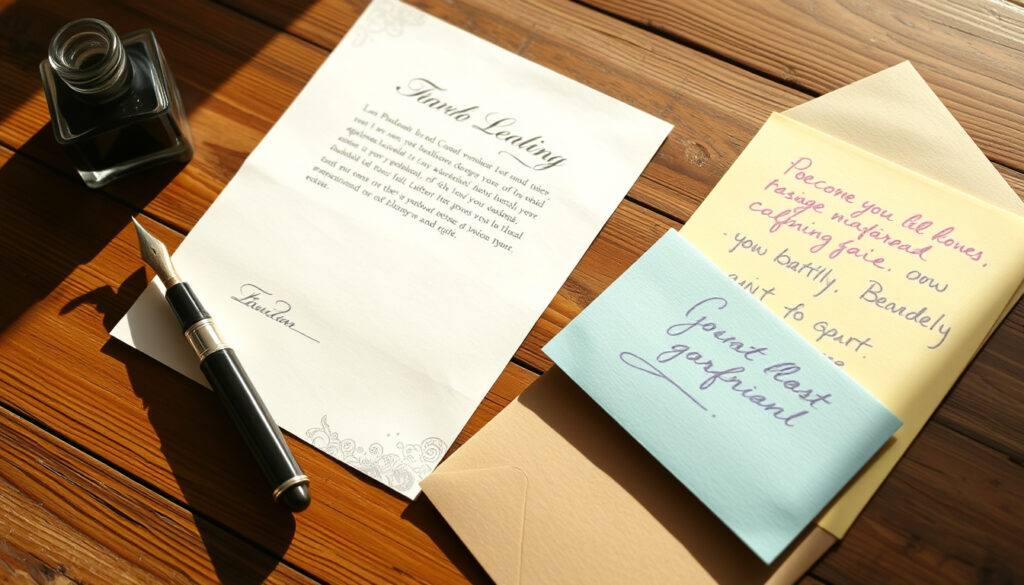
How to Write a Letter: Formal and Informal Guide with Examples
There’s something quietly powerful about putting pen to paper and shaping thoughts into a letter — a feeling that’s survived emails, texts, and DMs. Whether you’re writing to a friend on the other side of the country or submitting a formal request to an organization, the structure of your letter carries more weight than most people realize.
Personal letters sent annually in the US: over 2 billion (USPS, 2023)
·
Average time for a one-page handwritten letter: about 15–20 minutes
·
Countries with formal letter-writing conventions: most of 195 follow Western or local standards
Quick snapshot
- Formal letters begin with a salutation and sender’s address (BBC Bitesize (UK educational authority))
- Business letters use block format in most English-speaking countries (George Mason University Writing Center)
- Handwritten letters should use clear, legible handwriting (Reading Rockets (literacy nonprofit))
- Year-on-year decline rate of personal letter volume vs. digital messages isn’t tracked consistently
- Whether letter templates improve writing quality for all users remains debated
- Letter writing has persisted from ancient times through the 21st century, adapting to each communication revolution
- A resurgence of personal letter writing for mindfulness and deeper connection, even as digital tools dominate
Six key facts, one pattern: letter structure has remained remarkably stable across centuries because it serves a clear purpose — organizing thought and intent for the reader.
| Element | Value |
|---|---|
| Common formal salutation | Dear [Title] [Last Name] |
| Date format in US letters | Month Day, Year (e.g., March 15, 2025) |
| Typical paragraphs in formal letter body | 3 paragraphs (introduction, details, conclusion) |
| Handwritten letter readability tip | Use black or blue ink on plain or lined paper |
| Formal closing for unknown recipient | Yours faithfully |
| Formal closing for known recipient | Yours sincerely |
How do you start writing a letter?
Choosing the right salutation
The first word your recipient reads sets the entire tone. For formal letters, BBC Bitesize (UK educational authority) notes that most start with “Dear” before the recipient’s name. If you don’t know the name, use “Dear Sir or Madam.” For business letters in the US, the George Mason University Writing Center (academic writing resource) adds that the salutation should end with a colon. Informal letters are more flexible — “Hi” or “Dear” followed by the first name works naturally.
Including your address and the date
Your address belongs in the top right corner; the date goes directly below it. The BBC Bitesize (UK educational authority) lists the components: full name, full address, email address, and date. For formal letters, add the recipient’s address on the left side, below the date. Pemberly Fox (lifestyle stationery brand) confirms the sequence as address, date, recipient address, salutation, body, complimentary close, and signature.
The implication: placing address and date correctly tells the reader this is a deliberate, not careless, communication — it builds trust before a single sentence of body text is read.
Beginning with a clear purpose
State your reason for writing within the first two sentences. The Grammarly (writing assistant platform) workflow recommends choosing your format, adding contact info and date, writing the salutation, then writing the body with a clear opening. This structure helps the reader quickly understand context and intent, whether you’re applying for a job, sharing news with a friend, or making a formal request.
A letter’s opening is the only chance to establish relevance for the reader. If you bury your purpose, the recipient may skim or set it aside entirely — especially in formal correspondence where time is limited.
What is the format to write a letter?
Formal letter layout components
The skeleton of a formal letter includes your address, the date, the recipient’s address, a salutation, body paragraphs, a closing, and your signature. BBC Bitesize (UK educational authority) recommends starting by defining your overall purpose, bullet-pointing main ideas, drafting, and proofreading. For business letters specifically, the George Mason University Writing Center (academic writing resource) lists the same components with one addition: a name/position block after the signature.
Business letter block format
Block format means everything — return address, date, inside address, salutation, body paragraphs, closing, and signature — is aligned to the left margin. The George Mason University Writing Center (academic writing resource) specifies that paragraphs follow each other with a blank line in between, no first-line indent. Grammarly (writing assistant platform) recommends Times New Roman or Arial, 12-point font, single spacing, and margins of two inches top and bottom, one inch on sides. The IONOS (web hosting and business guide) notes that US letters typically use letter-size paper with 1-inch margins.
Informal letter format basics
Informal letters are looser. Addresses are often optional, salutations can be casual (“Hey” or “Hi [First Name]”), and the structure follows natural conversation. Grammarly (writing assistant platform) still recommends a six-step framework — format, contact info, date, salutation, body, close — but the execution is more relaxed. The body can include multiple topics, personal stories, questions for the recipient, and even drawings or photos.
The pattern: formal letters prioritize clarity and hierarchy; informal letters prioritize warmth and connection. Getting the format wrong for the context signals inexperience.
How do I write a simple letter?
Simple letter writing steps
- Write your name and contact information first (Indeed Career Advice (career platform)).
- Add the date, followed by the recipient’s name and address if formal.
- State your main message clearly in the first paragraph.
- Expand on that message in the body (typically 2–3 paragraphs).
- Close with a friendly or formal sign-off depending on who’s reading.
- Sign your name underneath.
What to include in the body
The body has three jobs: introduce the subject, develop it with details, and point toward a conclusion. Grammarly (writing assistant platform) says most business letter bodies contain an introduction, main text, and conclusion. For personal letters, the same structure applies but with more conversational language. A good rule: keep paragraphs short — three to five sentences max — so the reader doesn’t feel overwhelmed by a wall of text.
Ending a simple letter
The closing mirrors the salutation. Formal letters use “Yours sincerely” (if you used the recipient’s name) or “Yours faithfully” (if you used “Dear Sir or Madam”). The University of Wisconsin Writing Center (academic writing resource) says to skip four lines after the closing phrase before typing your printed name — leaving room for a signature. For personal letters, “Best,” “With love,” “Yours,” or “Talk soon” work depending on your relationship.
A short, simple letter risks feeling abrupt if the relationship is close; a longer one risks losing a busy reader’s attention. The solution: match length to the recipient’s expectations and your shared context.
How to write a formal letter
Formal salutation and closing rules
The salutation is “Dear” plus the recipient’s title and surname. The BBC Bitesize (UK educational authority) and the George Mason University Writing Center (academic writing resource) agree: use a colon after the name in US business letters, a comma in UK formal correspondence. The closing follows a pattern:
– “Yours sincerely” — when you addressed the recipient by name
– “Yours faithfully” — when you used “Dear Sir or Madam”
– “Sincerely,” “Sincerely Yours,” or “Respectfully” — common US business closings, per the GMU Writing Center.
Using titles and surnames
Always use the correct title: Mr., Ms., Mrs., Dr., Professor, or a professional designation. When in doubt, “Mr.” or “Ms.” is safe. If you know the recipient’s gender but not their marital status, “Ms.” is standard for women. The Twinkl USA (educational video resource) notes that if you don’t know the person’s name, “Sir or Madam” works in a formal greeting, though some writers find it outdated. The safer option: call the organization and ask for the correct name.
Tone and language for formal letters
Use polite, professional language throughout. Avoid contractions (“don’t” becomes “do not”), slang, and overly emotional phrasing. The BBC Bitesize (UK educational authority) recommends proofreading for spelling, punctuation, and grammar before sending — because a small error in a formal letter can undermine your credibility. Keep the letter to a single page when possible, as Grammarly (writing assistant platform) advises for business correspondence.
The catch: formal tone is about precision, not coldness. A well-written formal letter feels respectful, not robotic.
How to write an informal letter
Personal letter openings
Pemberly Fox (lifestyle stationery brand) suggests being yourself and creating a comfortable tone. Start with a warm greeting and a brief update about your own life before diving into the main topic. A simple “How are you? It’s been too long” or “I was thinking about our last conversation” creates immediate intimacy. Unlike formal letters, you can skip addresses entirely and use the recipient’s first name in the salutation.
Sharing news and asking questions
Personal letters thrive on reciprocity. Share a story or update, then ask a question to invite a response. This conversational back-and-forth transforms a monologue into dialogue. According to BestSelf Media (personal development publisher), asking about the recipient makes the letter engaging and shows genuine care. Include specific details — “How did your daughter’s recital go?” — to demonstrate that you remember and value their life.
Sign-offs for friends and family
Your closing should match your relationship. Common informal sign-offs include “With love,” “Yours,” “Best,” “Talk soon,” “Take care,” or “All the best.” More affectionate closings like “Hugs” or “Thinking of you” work for close family and intimate friends. Sign your first name (or nickname) below the closing. No need for full printed names or signatures — informal letters are about connection, not formality.
Informal doesn’t mean sloppy. A personal letter without effort — rushed handwriting, unclear sentences, a generic sign-off — can feel dismissive to someone who values the gesture. The medium itself signals care; the execution either confirms or contradicts it.
The three elements above — openings, news-sharing, and closings — form a loop. A good personal letter mirrors a good conversation: it gives, asks, and leaves the door open for more.
Related reading: What Does CV Stand For? Curriculum Vitae Meaning & Examples
Frequently asked questions
What is the best font for a typed letter?
For typed formal letters, Grammarly (writing assistant platform) recommends Times New Roman or Arial, 12-point font. These are standard, legible, and professional across document formats.
Do I need to include my address in an informal letter?
No — informal letters to friends and family typically omit addresses, especially if the recipient already knows where you live. Including only the date is sufficient.
How long should a letter be?
Grammarly (writing assistant platform) suggests keeping business letters to a single page. Personal letters can be as long as feels natural — one to two pages is typical.
Can I email a formal letter?
Yes, but the format matters. Treat the email body as the letter itself: include a subject line, a formal salutation, structured paragraphs, and a proper closing. Attaching a PDF of the signed letter is also acceptable for very formal correspondence.
What is the difference between ‘Yours sincerely’ and ‘Yours faithfully’?
Use “Yours sincerely” when you addressed the recipient by name (e.g., “Dear Mr. Smith”). Use “Yours faithfully” when you used “Dear Sir or Madam” and don’t know the recipient’s name, as noted by BBC Bitesize (UK educational authority).
Should I use a comma or colon after the salutation?
In US business letters, use a colon (Dear Mr. Smith:). In UK formal correspondence, a comma is more common. Both are acceptable, but consistency matters within a single letter, per George Mason University Writing Center (academic writing resource).
How do I write a letter of complaint?
State the issue clearly in the first paragraph, including any relevant order numbers, dates, or product names. Explain what you’ve already done to resolve the issue. In the final paragraph, state your desired resolution (refund, replacement, apology). Maintain a professional tone throughout — BBC Bitesize (UK educational authority) stresses proofreading for spelling and grammar in all formal correspondence.
For anyone sitting down to write their first formal letter or their hundredth personal note, the choice is clear: invest the extra few minutes to match structure to intent. Use block format and “Yours sincerely” when the stakes are high; use warmth and open-ended questions when connection matters more. The cost of a misaligned format is a lost opportunity. The reward of getting it right is being understood.
More related posts
 Ka Ying Rising Horse: Owner, Pedigree, Record & Next Race
 State Highway 63 Marlborough Cracks: Updates & Closures
 Kiwi Gold Price Spikes: Record Highs, Flash Crash & NZ Impact
 Love It or List It 2026: Pay, Host Changes, and Status
 Free Things to Do in Rotorua: Top Attractions
 Te Ngae Fish Supply in Rotorua: Menu, Reviews, Prices
 Fluffy Pancake Recipe NZ: Secrets, Tips & Best Variations
 New Zealand Dollar to Sri Lankan Rupees: Today’s Rate & Guide