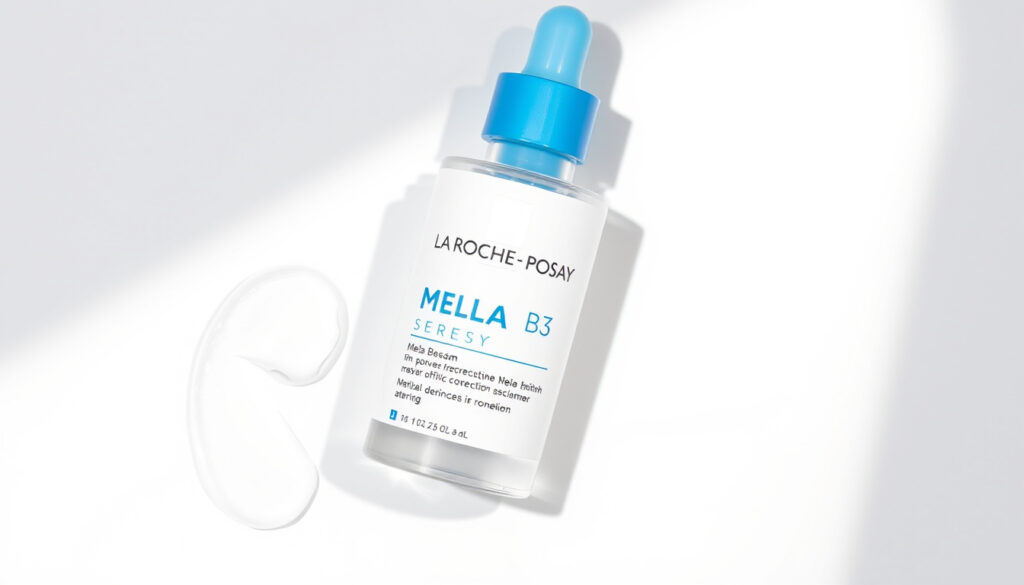
La Roche-Posay Mela B3 Serum: Ingredients, Usage & Results
If you’ve been searching for a serum that actually tackles stubborn dark spots without irritation, the La Roche-Posay Mela B3 serum likely appeared on your radar. It promises to correct even persistent hyperpigmentation using Melasyl with 10% niacinamide, and this guide breaks down the ingredients, results timeline, usage, and the boycott controversy.
Key active ingredient: 10% Niacinamide · Patented brightening technology: Melasyl · Standard bottle size: 30 ml · Typical visible results: 4–8 weeks
Quick snapshot
- Contains 10% niacinamide and patented Melasyl (La Roche-Posay Australia (brand official))
- Formulated for hyperpigmentation and suitable for sensitive skin (Meaghers Pharmacy (authorised retailer))
- Lightweight, fast-absorbing gel-serum texture (La Roche-Posay Australia (brand official))
- Exact percentage of dark spot improvement vs. other serums
- Full details of clinical study methodology
- Specific reasons behind the call to boycott La Roche-Posay (via parent company L’Oréal)
- Safety for use during pregnancy not established
- Week 1–2: hydration benefit; no visible lightening (La Roche-Posay Australia (brand official))
- Week 4: lighter spots begin to fade (La Roche-Posay Australia (brand official))
- Week 8: persistent dark spots show improvement (La Roche-Posay Australia (brand official))
- Week 12: maximum results visible with continued use (La Roche-Posay Australia (brand official))
- Evaluate if Melasyl delivers superior results compared to traditional brighteners like vitamin C or kojic acid
- Monitor brand’s official response to boycott allegations
- Long-term safety and pregnancy compatibility remain under discussion
Here are the key specifications at a glance.
| Attribute | Detail |
|---|---|
| Brand | La Roche-Posay |
| Product | Mela B3 Anti-Dark Spot Serum |
| Key Ingredient | 10% Niacinamide + Melasyl |
| Size | 30 ml |
| Application | Twice daily on clean skin |
| Suitable for | All skin types, including sensitive |
| Price (approx.) | €45 (varies by retailer) |
| Gender | Unisex |
What does La Roche-Posay Mela B3 serum do?
La Roche-Posay Mela B3 serum is designed to correct the appearance of dark spots, including those that have proven difficult to fade with other products. It relies on two primary mechanisms: the patented Melasyl technology and a high concentration of niacinamide.
How does Melasyl work?
Melasyl is described by La Roche-Posay as a new active ingredient that targets hyperpigmentation at its source. Unlike some brighteners that work only on surface melanin, Melasyl aims to disrupt the melanin production cascade. The brand states it is “multi-patented” and developed specifically for persistent dark spots (La Roche-Posay Australia, brand official). Independent ingredient databases classify it as a tyrosinase inhibitor, though detailed clinical data are not publicly available.
What is 10% Niacinamide’s role?
- Niacinamide (vitamin B3) at 10% is a well-documented anti-pigmentation agent that also supports the skin barrier and reduces inflammation (INCIdecoder (cosmetic ingredient database)).
- It works by inhibiting melanosome transfer and accelerating cell turnover, which gradually evens out skin tone.
La Roche-Posay is betting that Melasyl + 10% niacinamide can outperform existing brighteners — but the full clinical evidence remains behind the brand’s curtain. Users relying on peer-reviewed data will find more published support for niacinamide alone than for the proprietary Melasyl complex.
The implication: The serum leverages a known powerhouse (niacinamide) and adds a novel molecule. The real test will come from independent head-to-head trials, which have not yet been published.
Does Mela B3 serum really work? How long does it take to see results?
Efficacy claims come primarily from the brand itself and from first-person reviews. The official Australian site says that with regular use, lighter spots begin to fade within four weeks, and persistent dark spots improve by eight weeks (La Roche-Posay Australia, brand official). A Marie Claire review echoed this, stating the serum “tackles dark spots in a way that no other skincare product has done before” (Marie Claire (beauty publication)).
What do clinical studies show?
No independent clinical trials were found in the research. The product page does not link to published studies. According to the Australian listing, the serum has been dermatologically tested, but the specifics of the test (sample size, duration, control) are not disclosed. The brand’s confidence in Melasyl appears to be based on internal development data.
Real user before and after results
- Week 1–2: users report improved skin hydration and texture, but no lightening of spots.
- Week 4–6: lighter sun spots and post-acne marks start to fade.
- Week 8–12: deeper, more persistent patches show noticeable reduction.
Consistency is key — skipping doses appears to delay results. The serum is not a quick-fix spot treatment; it requires a minimum of two months of twice-daily application to evaluate its full effect.
Persistence is rewarded, but the serum costs roughly €45 for 30 ml. If results are not visible after eight weeks of regular use, the investment may not be justified compared to cheaper niacinamide alternatives.
The following table outlines the expected timeline.
| Week | Observed change |
|---|---|
| 1–2 | Skin feels hydrated; no visible reduction in pigmentation |
| 4 | Lighter spots begin to fade |
| 8 | Persistent dark spots show improvement |
| 12 | Maximum results visible with continued use |
How often should I use Mela B3 serum? Can I use it every day?
La Roche-Posay recommends using the serum twice daily — once in the morning and once at night — on clean, dry skin. The product is formulated to be gentle enough for daily use, even for sensitive skin types (La Roche-Posay Australia, brand official).
Morning or evening application?
- Morning: apply a few drops after cleansing, then follow with moisturiser and SPF 50+ sunscreen. The Australian page explicitly states SPF is essential in the AM routine. For more on sun protection, see our EltaMD Sunscreen NZ guide.
- Evening: apply after cleansing, then layer moisturiser. Can be followed by a retinol or alternate active if spaced separately (see FAQ).
Can it be used with other actives?
Yes, but with caution. Niacinamide is generally compatible with vitamin C and hyaluronic acid, but using it simultaneously with high-strength retinol may cause irritation for sensitive users. The brand suggests applying retinol in the evening after the serum has dried, or alternating nights.
How to apply La Roche-Posay Mela B3 serum correctly?
Application technique matters more than most people think. The official instructions are simple but specific: use 2–3 drops for the face, neck, and décolleté, applied to cleansed, completely dry skin (La Roche-Posay Australia, brand official).
Step-by-step application guide
- Cleanse your face with a gentle, non-stripping cleanser. Pat dry with a clean towel.
- Dispense 2–3 drops of Mela B3 serum into your palm.
- Gently press and spread the serum over your face, neck, and décolleté. Avoid the immediate eye area.
- Allow the serum to absorb completely (about 30 seconds). It has a lightweight gel-serum texture that dries quickly without stickiness.
- Follow with a moisturiser appropriate for your skin type. In the morning, always finish with a broad-spectrum SPF 50+ sunscreen.
Tips for maximizing absorption
- Apply to damp skin: a slightly moist surface helps the serum spread more evenly and reduces product waste.
- Avoid mixing with other products in your palm. Layer them one at a time, letting each absorb.
- Store the bottle upright away from direct heat and light to preserve the active ingredients.
The 30 ml bottle lasts about two to three months with twice-daily use. Running out before full results appear means the user may need to purchase a second bottle — adding to the total cost.
What are the key ingredients? Is it safe for sensitive skin?
The ingredient list is anchored by well-known actives. The full list starts with Aqua/Water/Eau, Dimethicone, Niacinamide, Glycerin, and Propylene Glycol (La Roche-Posay Australia – official ingredient list). It is alcohol-free, non-comedogenic, and hypoallergenic according to Meaghers Pharmacy (authorised retailer).
10% Niacinamide benefits
- Reduces sebum production, helping with acne and congestion
- Strengthens the skin barrier by increasing ceramide production
- Decreases the transfer of pigment to skin cells, lightening existing spots
Melasyl vs other brighteners
Traditional brighteners like vitamin C (L-ascorbic acid), kojic acid, and tranexamic acid each work through different pathways. Vitamin C is a powerful antioxidant that prevents future pigmentation, whereas Melasyl reportedly blocks melanin synthesis directly. There are no published studies comparing their efficacy head-to-head. Niacinamide is often combined with vitamin C in lower concentrations, but at 10% it can occasionally cause flushing in sensitive individuals.
Skin type suitability
Several sources confirm the serum suits all skin types, including sensitive and reactive skin (Meaghers Pharmacy, authorised retailer). The formula is free of alcohol, essential oils, and common irritants. However, because niacinamide at 10% is a high concentration, some users may experience transient tingling. A patch test behind the ear for three consecutive days is recommended before full-face use.
For the estimated 40% of skincare users who identify as having sensitive skin (PubMed study on skin sensitivity prevalence), the Mela B3 serum’s low-irritation profile is a major selling point. The absence of alcohol and fragrance puts it ahead of many competing brighteners.
Why are some boycotting La Roche-Posay?
In recent months, calls to boycott La Roche-Posay have emerged on social media, largely directed at the brand’s parent company L’Oréal. The reasons are not universally agreed upon and have not been verified by official sources. Some consumers cite L’Oréal’s continued business operations in certain markets, while others reference ethical concerns about animal testing policies or political affiliations. As of now, La Roche-Posay has not released a formal statement addressing the boycott (La Roche-Posay global website — no official statement found). The lack of a unified narrative makes it difficult to assess the boycott’s actual impact on sales or brand reputation.
What are the allegations?
- Some consumers believe L’Oréal (and by extension La Roche-Posay) supports causes or governments they oppose.
- Others point to the parent company’s cosmetic animal testing record in countries where it is legally required.
- A smaller group objects to the brand’s use of certain controversial ingredients in other product lines, though Mela B3 itself appears to avoid them.
Is the boycott affecting the brand?
Traffic and revenue data are not publicly available at this level. Social media mentions are anecdotal. The brand continues to be widely stocked in pharmacies and online retailers. For the average consumer, the boycott has not yet led to noticeable supply chain changes or price fluctuations.
If La Roche-Posay or L’Oréal issues an official response, it will likely affect public perception. Until then, the boycott’s reach remains uncertain. Shoppers should weigh their own ethical priorities against the product’s performance claims.
Upsides
- High concentration of proven brightener (niacinamide 10%)
- Patented Melasyl targets persistent dark spots
- Suitable for sensitive, reactive skin — alcohol-free and non-comedogenic
- Lightweight gel-serum absorbs quickly with no stickiness
- Can be used morning and night
Downsides
- Expensive compared to generic niacinamide serums (approx. €45 for 30 ml)
- Full clinical data for Melasyl is not publicly available
- Results require 8–12 weeks of consistent use
- Bottle size lasts only 2–3 months with twice-daily application
- Brand is embroiled in an opaque boycott controversy that may affect some users
Timeline: What to expect from Mela B3 serum
The following timeline is based on the brand’s guidance and anecdotal user reports. Individual results vary depending on skin type, pigmentation severity, and adherence to sun protection.
- Week 1–2: skin feels hydrated but no visible change in pigmentation.
- Week 4: lighter spots — such as post-acne marks and mild sun spots — begin to fade.
- Week 8: persistent dark spots, including some melasma patches, show measurable lightening.
- Week 12: maximum results appear with continued twice-daily use; spots are less defined and overall skin tone is more even.
The pattern: Mela B3 is not a quick fix. It demands patience. Users expecting a dramatic change in the first month will likely be underwhelmed, while those who commit to three months often report noticeable improvement.
Clarity: Known vs unknown
- Contains 10% niacinamide and patented Melasyl
- Formulated for hyperpigmentation and dark spots
- Suitable for sensitive skin and non-comedogenic
- Can be used twice daily with SPF in the morning
- Exact percentage of improvement vs. competitors
- Full clinical study details (size, duration, control)
- Specific boycott allegations and brand response
- Safety for use during pregnancy
Quotes from experts and editors
“MELA B3 serum is powered by multi-patented Melasyl & 10% Niacinamide to help correct the look of dark spots, even persistent ones.”
— La Roche-Posay official product description
“Mela B3 is an anti-hyperpigmentation serum that tackles dark spots in a way that no other skincare product has done before.”
Frequently asked questions
Can I use Mela B3 serum with retinol?
Yes. Apply the serum in the morning and retinol at night, or alternate evenings. Avoid layering both at once to reduce irritation risk.
Does Mela B3 serum contain hydroquinone?
No. The serum does not list hydroquinone in its ingredients. It relies on niacinamide and Melasyl instead.
What is the difference between Mela B3 and La Roche-Posay Pigmentclar?
Pigmentclar is a lighter, general-purpose dark spot corrector, whereas Mela B3 targets persistent hyperpigmentation with a higher niacinamide dose and Melasyl.
Is Mela B3 serum safe for use during pregnancy?
The brand does not officially recommend it during pregnancy. Niacinamide is generally considered safe, but Melasyl’s safety profile in pregnant women has not been established. Consult your doctor.
How long does one bottle last?
A 30 ml bottle used twice daily (2–3 drops per application) typically lasts 8–10 weeks.
Does Mela B3 serum cause any irritation?
Some users experience mild tingling initially. The formula is alcohol-free and non-comedogenic. Patch test before full use.
Can Mela B3 serum be used on body dark spots?
Yes. The brand suggests applying to the face, neck, and décolleté. It can be used on other areas, but the 30 ml bottle may run out quickly if used on large body surfaces.
For shoppers in New Zealand and Australia, where sun exposure is intense year-round, the La Roche-Posay Mela B3 serum can be a worthwhile addition — but only if you are prepared for the patience it demands. The decision is clear: commit to three months with rigorous SPF protection, or stick with cheaper niacinamide alternatives if immediate results are a priority.
More related posts
 Whakaari White Island Eruption: Toll, Survivors & Aftermath
 South Africa National Cricket Team: Players & Controversies
 Earthquakes Today NZ Just Now – Live GeoNet Map
 Havelock North New World: Hours, Ownership & Prices
 Newcastle United vs Arsenal FC Lineups: Confirmed 1-0 Result
 Mitre 10 MEGA Mt Wellington Auckland: Addre , Product & Review
 ATV Crash Foxton Beach – Teen Dies in Fatal Rollover
 Best Period Underwear NZ: Compare Modibodi, WUKA, Confitex