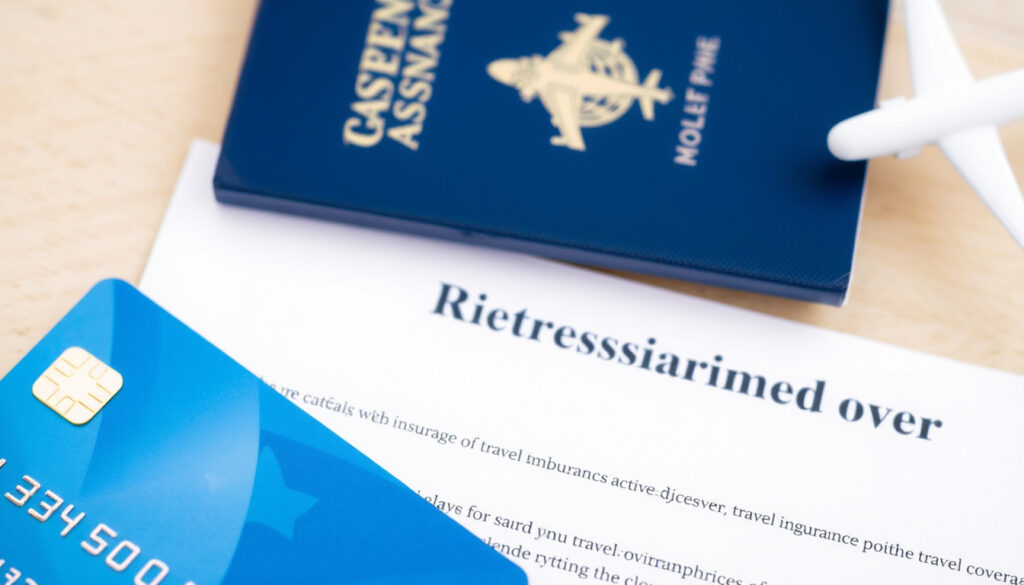
BNZ Credit Card Travel Insurance: Eligibility & Activation Guide
Most of us assume our credit card has our back when we travel. But with BNZ’s complimentary travel insurance, a few specific steps separate a smooth claim from an unexpected bill. This guide lays out exactly who qualifies, how to activate cover, what changed in 2024, and what a $300 excess means for your next trip.
Maximum trip duration: 90 days ·
Insurance excess (per claim): $300 ·
Eligible card: BNZ Advantage Visa Platinum ·
Cover for snow sports: Yes, with conditions ·
Coverage type: Complimentary with card
Quick snapshot
- BNZ Advantage Visa Platinum includes international travel insurance for round trips of up to 90 days (BNZ support page)
- Excess increased from $200 to $300 for departures on or after 3 February 2026 (BNZ public notice)
- Activation is required before departure (BNZ Travel insurance page)
- Exact conditions under which snow sports are covered
- Full list of exclusions, particularly pre-existing medical conditions
- Whether business trips are ever covered under alternative card products
- 2024: BNZ updates terms — excess to rise, snow sports and cruise cover become optional add-ons (BNZ public notice)
- 3 February 2026: New rules take effect (BNZ public notice)
- Cardholders should check their policy wording for exact cover details (BNZ Travel insurance page)
- Consider purchasing optional snow sports or cruise cover before Feb 2026 (BNZ Travel insurance page)
| Detail | Value |
|---|---|
| Card required | BNZ Advantage Visa Platinum or Advantage Visa Business |
| Maximum trip length (Platinum) | 90 days |
| Maximum trip length (Business) | 35 days |
| Excess per claim | $300 (changes from $200 on 3 Feb 2026) |
| Snow sports cover | Yes, conditions apply |
| Business travel | Not covered |
| Activation required | Yes |
| Insurer | AIG |
| Eligible prepaid costs | Accommodation, tours, transport, or return travel tickets |
| Age limit | Under 90 years on departure date |
Eligibility is broader than many assume, but the activation and excess rules matter most in practice.
Does a BNZ Visa cover travel insurance?
Which BNZ credit cards include travel insurance?
- BNZ Advantage Visa Platinum — includes international travel insurance for personal round trips of up to 90 days (BNZ support page)
- BNZ Advantage Visa Business — includes travel insurance for business-purpose trips of up to 35 days (BNZ Travel insurance page)
- Other BNZ cards do not offer this benefit.
What is the coverage scope?
Coverage is for personal trips only with the Platinum card. The cardholder must use their BNZ Advantage card to pay some amount toward prepaid travel costs — prepaid accommodation, tours, transport, or return tickets (BNZ eligibility page). The trip must start and end in New Zealand, and the traveler must hold a return ticket before departing.
BNZ sets a hard age limit: the cardholder and spouse must be under 90 on departure day — no exceptions. All insured persons must permanently reside in New Zealand (BNZ support page).
The implication: BNZ positions this as a product for New Zealand residents taking personal leisure trips — not for expats or business travelers.
How can I check if I’m eligible for BNZ credit card travel insurance?
Eligibility criteria for BNZ Advantage Visa Platinum holders
- You must hold a current BNZ Advantage Visa Platinum or Business card.
- You must pay some prepaid travel costs with that card.
- The trip must be a round trip starting and ending in New Zealand, lasting no more than 90 days (Platinum) or 35 days (Business).
How to confirm your card status
You can check your card type easily via BNZ online banking or the BNZ mobile app. Look under “Cards” or “Account details” to see whether your card is a Platinum or Business product (BNZ support page). If you’re unsure, contact BNZ directly.
Why this matters: your card type determines your trip length limit — missing that 35-day vs 90-day boundary could leave you uninsured mid-trip.
Do you need to activate credit card travel insurance?
Steps to activate BNZ travel insurance before departure
Yes — activation is required. BNZ explicitly states that coverage does not start automatically (BNZ Travel insurance page). You can activate:
- Via the BNZ travel website
- By contacting BNZ directly
- Through the BNZ mobile app
What happens if you don’t activate?
If you don’t activate before departure, you will not have travel insurance cover for that trip. This is a common gap — many cardholders assume the benefit is automatic.
The crucial distinction: paying with the card makes you eligible, but only activation starts the cover. Many miss this step (BNZ support page).
The trade-off: a small step forgotten can cost thousands if something goes wrong overseas.
Do I need to notify BNZ of overseas travel?
BNZ notification requirements for credit cards
Notifying BNZ of overseas travel is recommended to prevent your card from being blocked due to suspicious overseas transactions. Notification does not affect your insurance coverage status (BNZ support page).
How to notify BNZ before traveling
- Via the BNZ mobile app — select “Travel notice” under card settings
- In BNZ online banking
- By phoning BNZ directly
Setting a travel notice is separate from activating insurance. You need to do both for a smooth travel experience.
The pattern: many travelers confuse notification with activation — they’re two different actions for two different purposes.
What are the benefits of BNZ insurance?
Key coverage benefits: medical, trip cancellation, lost luggage
BNZ’s credit card travel insurance includes several core benefits common to comprehensive travel policies:
- Medical expenses — covers emergency medical treatment overseas
- Trip cancellation — reimburses prepaid, non-refundable travel costs if you need to cancel for a covered reason
- Lost luggage — compensation for baggage that is lost, damaged, or delayed
Recent changes: excess increase and snow sports cover
In 2024, BNZ announced upcoming changes to the policy. For departures on or after 3 February 2026:
- The excess per claim rises from $200 to $300 (BNZ public notice)
- Snow Sports Cover becomes an optional add-on rather than included
- Cruise Cover also becomes an optional add-on
“Some cover that used to be automatic is now optional and can be added on, including Cruise Cover and Snow Sports Cover.”
BNZ Travel insurance page, 2024
“For departures on or after 3 February 2026, travel insurance excesses increase from $200 to $300.”
BNZ public notice, 2024
If you plan a ski trip after February 2026, you’ll need to actively add snow sports cover — it won’t be included by default. The higher excess means the first $300 of any claim is your responsibility.
For BNZ cardholders who travel regularly, the implication is clear: check your policy wording before every trip, especially if your travel involves snow sports or cruises.
Pros and cons of BNZ credit card travel insurance
Upsides
- Complimentary with eligible cards — no extra premium
- Up to 90 days cover (Platinum)
- Snow sports and cruise cover available (optional from 2026)
- Medical, cancellation, and luggage cover included
Downsides
- Activation required — not automatic
- Excess rises to $300 per claim
- Business travel not covered
- Snow sports and cruise cover becoming optional add-ons
- Pre-existing conditions may not be covered
The trade-off: free insurance requires active steps and has clear limits — it’s not a substitute for a comprehensive standalone policy for complex trips.
How to activate BNZ credit card travel insurance: step-by-step
- Check your card — ensure you hold a BNZ Advantage Visa Platinum or Business card (BNZ eligibility page)
- Pay prepaid costs — use your BNZ card to pay for accommodation, tours, transport, or return tickets
- Visit the BNZ travel website — go to the travel insurance activation page
- Enter your details — provide your card number, trip dates, and personal information
- Confirm activation — ensure you receive a confirmation before departure
- Set a travel notice — notify BNZ of your travel dates to avoid card blocks
The pattern: three distinct actions — pay, activate, notify — all required before you leave New Zealand.
bnz.co.nz, bnztravel.co.nz, wise.com, wise.com, blog.healthcareplus.org.nz, bnztravel.co.nz, quashed.co.nz, facebook.com, canstar.co.nz
Frequently asked questions
What is the maximum coverage duration for BNZ credit card travel insurance?
For BNZ Advantage Visa Platinum, the maximum trip duration is 90 days. For BNZ Advantage Visa Business, it’s 35 days. The trip must be a round trip to and from New Zealand (BNZ support page).
Does BNZ travel insurance cover snow sports?
Currently, snow sports are covered under certain conditions. For departures on or after 3 February 2026, Snow Sports Cover will no longer be included automatically and must be purchased as an optional add-on (BNZ public notice).
How much is the excess for BNZ travel insurance?
The excess per claim is $200 for departures before 3 February 2026, rising to $300 for departures on or after that date (BNZ public notice).
Is BNZ travel insurance automatically included with any BNZ credit card?
No. Only BNZ Advantage Visa Platinum and Business credit cardholders are eligible. You must also activate the cover before departure (BNZ Travel insurance page).
Do I need to register my trip for coverage?
Yes, activation is required. Without activation, you will not have travel insurance cover even if you hold an eligible card (BNZ support page).
What documentation is needed to make a claim?
BNZ advises having your policy number, trip details, receipts for prepaid costs, medical reports (if applicable), and proof of loss for luggage claims. Contact AIG directly for the full claims process.
Does BNZ travel insurance cover pre-existing medical conditions?
Pre-existing conditions are generally not covered under the standard policy. BNZ recommends checking the policy wording or contacting AIG for specific questions about pre-existing conditions.
The pattern: most cardholders’ questions revolve around activation and coverage limits — knowing these prevents surprises.
For New Zealand travelers with a BNZ Advantage Visa card, this complimentary insurance offers real value — but only if you treat it as an active benefit, not a passive perk. Skiers and cruisers face the biggest shift: what was once included will require an extra purchase after February 2026. For the average cardholder, the choice is simple: activate before you fly, check your trip length, and budget for the $300 excess — or risk covering an overseas emergency out of pocket.
Related reading: Air New Zealand Cabin Crew Strike · Cheap Flights to Rarotonga
More related posts
 How to Play UNO: Official Rules, Setup & Step-by-Step Guide
 Prime Video NZ Cost 2025: Pricing, Discounts & Is It Worth It
 New World Metro Wellington: Location, Hours & Services
 NZD to INR: Exchange Rate, 1 Lakh & 1 Crore Conversions
 45 AUD to NZD – Current Rate, Trends and Best Providers
 Download Video From Youtube – Safe Legal Guide 2025
 State Highway 63 Marlborough Cracks: Updates & Closures