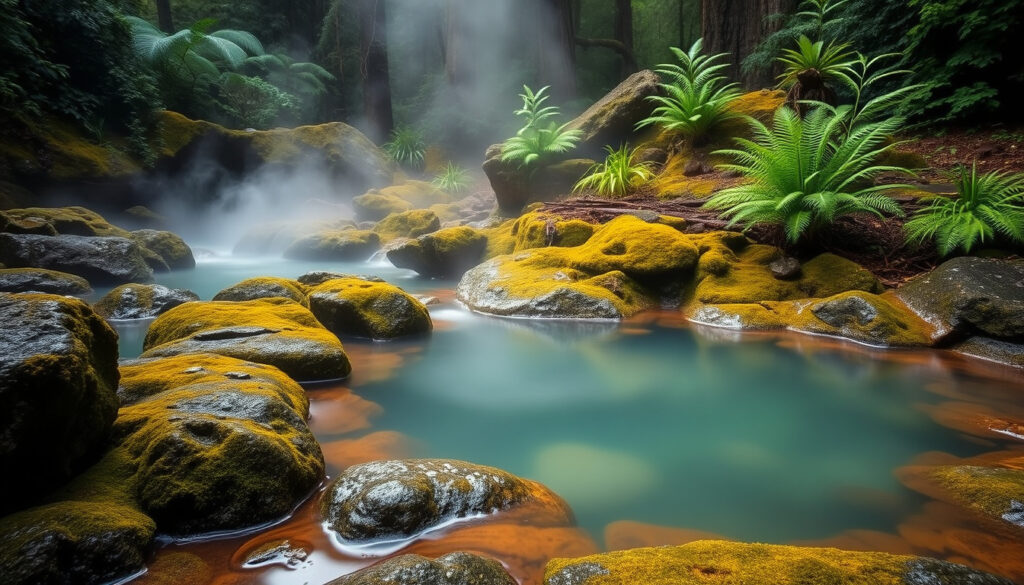
Free Hot Springs Rotorua: Best Thermal Pools and Parks
There’s something irresistible about soaking in warm, mineral-rich water without spending a cent, and Rotorua offers exactly that—if you know where to look. This guide cuts through the tourist brochures to show you the real free hot springs, natural pools, and steaming parks that won’t cost you a dollar.
Free geothermal public parks in Rotorua: 1 ·
Natural free hot pools within 30 minutes of Rotorua: 3+ ·
Average entrance fee for commercial hot pools: NZD 18–45 ·
Kuirau Park free thermal area size: 8 hectares
Quick snapshot
- Free entrance · 8 hectares · Steaming vents, small geysers, hot mud pools · Located 1 km from city centre (RotoruaNZ official tourism site)
- Free natural hot stream · 30 min south of Rotorua (toward Taupo) · Waterfall and natural pools · No facilities – swim at own risk (Petrina Darrah – local travel blogger)
- Free access · Walking paths, lawns · No hot pools but geothermal steam in spots · Good for a picnic (RotoruaNZ official tourism site)
- NZD 25–45 per person · Mineral hot pools, lake views · Various temperatures and private pools · Swimwear required (Polynesian Spa official site)
Four free or paid options, one key trade-off: whether you want managed facilities or raw nature. Here’s how they compare.
| Location | Cost | Distance from city centre | Facilities |
|---|---|---|---|
| Kuirau Park | Free | 1 km | Footpaths, picnic tables, toilets |
| Kerosene Creek | Free | 28 km south | None (bush track, no toilets) |
| Rotorua Lakefront | Free | 1 km | Walking paths, playground, picnic spots |
| Polynesian Spa | NZD 25–45 | 0.5 km | Changing rooms, lockers, café |
Kuirau Park gives you the full geothermal show—steam vents, boiling mud, foot baths—with zero entry cost. Kerosene Creek offers a wilder, more private soak, but you trade away every convenience.
Where are the free thermal areas in Rotorua?
Kuirau Park – free geothermal park
- What it is: New Zealand’s only free geothermal public park. Located just west of Rotorua’s town centre on Ranolf Street, it’s an easy, affordable place to start exploring geothermal sights (Petrina Darrah – local travel blogger).
- Features: Steaming hot pools, boiling mud, and free thermal foot baths. You can walk among small geysers and steam vents at no cost (RotoruaNZ official tourism site).
- Hours: Dawn to dusk, no gates. The park covers 8 hectares and has footpaths, picnic tables, and public toilets.
The implication: Kuirau Park is the only place in Rotorua where you can see erupting geothermal activity, touch boiling mud (safely), and soak your feet—all for free. For budget-conscious travellers, it’s an unmatched starting point.
The foot baths are open to everyone, but they can get crowded on weekends. Go early morning or late afternoon for a quieter soak.
Natural hot pools outside the city: Kerosene Creek and others
- Kerosene Creek: Rotorua’s best-known free bathing spot in thermal water, about a 30-minute drive south off State Highway 5 heading to Taupō (Petrina Darrah – local travel blogger). The final approach is via Old Waiotapu Road, with the last section being gravel. Road conditions vary with weather and grading (Hot Springs Guides – independent recreation site).
- What to expect: A short walk through bush alongside a hot water stream leads to a waterfall cascading into a naturally formed pool (Rotorua Travel Secrets – local guide). The water temperature is around 103–104°F, with a sandy bottom and depth of 2–6 feet, according to regular visitors (TripAdvisor reviews).
- No facilities: No ticket booth, no staff, no changing rooms, no toilets. The path can be muddy, uneven, and slippery after rain (Hot Springs Guides).
The pattern: Kerosene Creek is a trade-off—pure, natural thermal water in a beautiful setting, but you must come prepared. Without facilities, it’s not for everyone, but for those willing to carry a towel and dry bag, it’s a memorable soak.
The guide from Hot Springs advises keeping your head above water and avoiding swallowing the water, as the thermal water is untreated. Always check local water quality warnings before visiting.
Can you swim in hot springs in Rotorua?
Swimming in free natural hot pools: rules and safety
- Kerosene Creek and similar natural pools allow swimming but have no lifeguards. Swim at your own risk (Hot Springs Guides).
- There are no designated swimming areas in Kuirau Park—the hot pools there are for foot soaking only, not full immersion. Signs warn against entering the boiling mud and steaming vents.
- For full swimming in thermal water, you need to visit a commercial pool like Polynesian Spa or the Rotorua Aquatic Centre (charged).
The catch: You can swim in natural free hot springs like Kerosene Creek, but you accept zero supervision and untreated water. If you want guaranteed cleanliness and safety, you pay for it.
Commercial hot pools where swimming is allowed
- Polynesian Spa (NZD 25–45 adult) offers 28 mineral pools with varying temperatures, plus a lakeside pool. Strict hygiene rules apply—shower before entering, swimwear required (Polynesian Spa official site).
- Other paid options: Waikite Valley Thermal Pools (NZD 15–20) and the Rotorua Aquatic Centre (NZD 6–8) for family-friendly swimming.
Why this matters: If you’re a family with young children or someone who values changing rooms and lifeguards, the free natural pools may feel risky. The commercial options exist for a reason—safety and comfort.
How much does it cost to visit Rotorua hot pools?
Free options: Kuirau Park, natural streams
- Kuirau Park: NZD 0. Open daily, dawn to dusk.
- Kerosene Creek: NZD 0. Always open, but access road may be affected by weather.
- Other natural spots: Waikite Valley’s free foot bath (not swimming), and the Ohinemutu thermal area (free, foot soaking only).
Related reading: Te Ngae Fish Supply in Rotorua – a local spot worth pairing with a Kuirau Park visit.
Cheap paid options: family-friendly pools under NZD 25
- Rotorua Aquatic Centre: NZD 6.50 adult, NZD 4 child. Indoor heated pools, hydroslide, and geothermal water.
- Waikite Valley Thermal Pools: NZD 15 adult, NZD 10 child. Natural stone pools fed by a geothermal spring.
- Polynesian Spa: NZD 25–45 adult depending on package. Family pass (2 adults, 2 children) NZD 65–90 (Polynesian Spa official site).
Four price points, one pattern: free gives you nature, paid gives you comfort. The decision depends on your tolerance for roughing it.
Are there free geysers in Rotorua?
Free geyser viewing: Kuirau Park
- Kuirau Park has small geysers that erupt sporadically, plus steam vents and boiling mud pools—all free to view (RotoruaNZ official tourism site).
- The geysers are not as large or predictable as those at paid parks, but they offer a genuine geothermal experience.
The pattern: Kuirau Park gives you a taste of geothermal power without a ticket. But if you want the iconic Pohutu Geyser eruption (up to 30 metres high), you’ll need to pay entry to Te Puia.
Paid geyser experiences: Te Puia, Wai-O-Tapu
- Te Puia: Entry NZD 64 adult. Home to the Pohutu Geyser, kiwi bird enclosure, and Māori cultural performances.
- Wai-O-Tapu Thermal Wonderland: NZD 35 adult. Famous for the Champagne Pool and Lady Knox Geyser (daily eruption at 10:15 am, included in entry).
The trade-off: Free geyser viewing is real but modest. For the full spectacle, you pay. Most visitors find it worth the cost for at least one of the major parks.
What free activities are available in Rotorua?
Free geothermal walks
- Kuirau Park thermal walk: A circuit around steaming vents, boiling mud pools, and a small lake. Takes 20–30 minutes.
- Ohinemutu village: Free self-guided walk through a Māori settlement with steaming vents at the historic St Faith’s Church.
Free parks and lakes
- Redwoods Forest walk: Free entry (mountain biking and treewalk have fees). Walking trails through towering redwood trees.
- Rotorua Lakefront: Free access to lawns, walking paths, children’s playground, and geothermal steam vents in places (RotoruaNZ official tourism site).
Free cultural experiences
- Māori cultural performances at the Rotorua i-SITE visitor centre (check schedule).
- St Faith’s Church: Historic church with an iconic stained-glass window depicting Christ wearing a Māori korowai cloak.
Related reading: Whakaari White Island Eruption: Toll, Survivors & Aftermath – a reminder of New Zealand’s volatile geothermal landscape.
Upsides
- Kuirau Park offers genuine geothermal features at zero cost.
- Kerosene Creek provides a natural, private hot spring experience.
- Free activities allow you to spend a full day in Rotorua without spending money.
Downsides
- No supervision or water quality testing at natural pools.
- Lack of facilities at Kerosene Creek (toilets, changing rooms).
- Free geysers are small and unpredictable compared to paid parks.
The verdict: with a bit of planning, you can fill an entire day in Rotorua with free geothermal, cultural, and outdoor activities.
Confirmed facts & what’s unclear
Confirmed facts
- Kuirau Park is free and open daily, dawn to dusk (RotoruaNZ official tourism site).
- Kerosene Creek is free and accessible via an unpaved road off State Highway 5 (Hot Springs Guides).
- Polynesian Spa charges a minimum entry fee of NZD 25 per adult (Polynesian Spa official site).
What’s unclear
- Current water quality at Kerosene Creek—check local council warnings before visiting.
- Whether all free natural pools remain accessible year-round due to weather and road conditions.
The balance: while confirmed facts provide a solid foundation, visitors should verify current conditions for natural pools.
Voices from Rotorua
“Kuirau Park is a must-see—steaming hot pools, boiling mud, and free thermal foot baths. It’s the best free geothermal experience in Rotorua.”
— RotoruaNZ official guide
“Kerosene Creek is a well-known hot water stream in a bush setting. A short walk leads to a waterfall cascading into a natural pool.”
— Rotorua Travel Secrets guide
“There’s no ticket booth, no staff, no changing rooms. Come prepared with a towel, dry clothes, and a dry bag for valuables.”
— Hot Springs Guides
These perspectives highlight the enduring appeal of Rotorua’s free geothermal spots.
For travellers on a tight budget, the choice is clear: start your day at Kuirau Park for free geothermal views, pack a picnic for the lakefront, and drive 30 minutes south to Kerosene Creek for a natural hot soak. That’s a full Rotorua day at zero cost. For those who prefer guaranteed comfort and safety, the paid pools like Polynesian Spa are a reliable fallback—but you’ll miss the raw beauty of the bush creek. Either way, Rotorua’s geothermal riches are accessible to everyone, not just those with deep pockets.
Frequently asked questions
Are there free hot pools in Rotorua?
Yes. Kuirau Park offers free thermal foot baths, and Kerosene Creek is a free natural hot stream for swimming. Several other natural pools exist but require a short drive from the city.
Is Kuirau Park free to visit?
Absolutely. Kuirau Park is New Zealand’s only free geothermal public park. There is no entry fee, and it’s open from dawn to dusk every day (RotoruaNZ official tourism site).
Can you swim in Kerosene Creek?
Yes, swimming is allowed in the natural hot stream and pool. There are no lifeguards, and the water is untreated. Keep your head above water and avoid swallowing (Hot Springs Guides).
What is the cost of Polynesian Spa?
Adult entry ranges from NZD 25 to NZD 45 depending on the package. A family pass (2 adults, 2 children) costs NZD 65–90 (Polynesian Spa official site).
Are swimsuits required in Rotorua hot springs?
Yes, swimwear is required in all commercial hot pools and strongly recommended at natural pools. Nude bathing is not permitted in public areas.
Do free hot springs have changing facilities?
No. Kerosene Creek and other natural pools have no changing rooms, toilets, or lockers. Plan ahead and bring a towel and dry bag (Hot Springs Guides).
Where can I find a free geothermal walk in Rotorua?
Kuirau Park has a 20–30 minute self-guided thermal walk with steaming vents, boiling mud pools, and a small lake. Ohinemutu village also offers a free geothermal walk through a Māori settlement.
More related posts
 Book a Bach Rarotonga: Complete Holiday Home Guide
 Earthquake Wellington Just Now Live: Track & Prepare
 What Does CV Stand For? Curriculum Vitae Meaning & Examples
 The Big Bang Theory Guide: Hit Sitcom Facts (2007-2019)
 Punjab Kings vs Kolkata Knight Riders Standings – PBKS Leads, KKR 8th
 Hamilton Blue Bag Delivery – How to Order Free Replacements
 Mission Heights Primary School: Principal, Enrollment, Decile
 BNZ Term Deposit Rates 2026: Compare Best NZ Rates | Guide