How to Dry Flowers: 5 Easy Methods for Beautiful Preserved Blooms
There’s something quietly satisfying about turning fresh flowers into keepsakes that last far longer than a vase-life week. Whether you’re saving bridal bouquet stems or planning a craft project, the method you choose makes the difference between brittle, faded petals and blooms that still look vibrant months later.
Air drying duration: 2–3 weeks ·
Microwave drying duration: 5–10 minutes ·
Silica gel drying duration: 2–5 days ·
Flowers suitable for drying: over 70% of common varieties
Quick snapshot
- Air drying with upside-down hanging in a dark, ventilated room works for most sturdy blooms (Bloom & Wild (florist retailer))
- Microwave drying with silica gel finishes in about 10 minutes (ACTIVA Products (craft manufacturer))
- Reliability of drying flowers in under 1 minute without damage is unverified
- Optimal microwave power and duration for different flower types are not standardized
- Most traditional methods (air drying, pressing) require 1–3 weeks; quick methods (microwave, oven) take minutes (First Day of Home (home improvement blog))
- Crafters moving to resin embedding need fully desiccated flowers — quick methods are becoming the go‑to choice
Five drying methods compared: one pattern — speed and color preservation rise together, but only when gear and technique are dialled in.
| Method | Duration | Equipment needed | Color retention |
|---|---|---|---|
| Air drying (hanging) | 2–3 weeks | String, dark ventilated room | Moderate — some fading expected |
| Microwave + silica gel | 5–10 minutes | Microwave, silica gel, microwave-safe dish | Excellent — retains most pigment |
| Silica gel (no microwave) | 2–5 days | Silica gel, airtight container | Very good |
| Oven drying | 15–30 minutes | Oven, baking tray | Fair — risk of browning |
| Pressing (book method) | 1–2 weeks | Heavy book, paper | Moderate |
Bottom line: If you want maximum color for crafts or resin work, microwave drying with silica gel is your best bet — it finishes in minutes and locks in pigment better than any other method. For casual hobbyists, air drying is free and reliable.
What is the easiest way to dry flowers?
The easiest method is also the most accessible: air drying requires zero special equipment and works on most common blooms. But “easiest” doesn’t always mean “best for your project” — the trade‑off is time.
Air drying method
- No special equipment needed — just string, scissors, and a dark, dry spot.
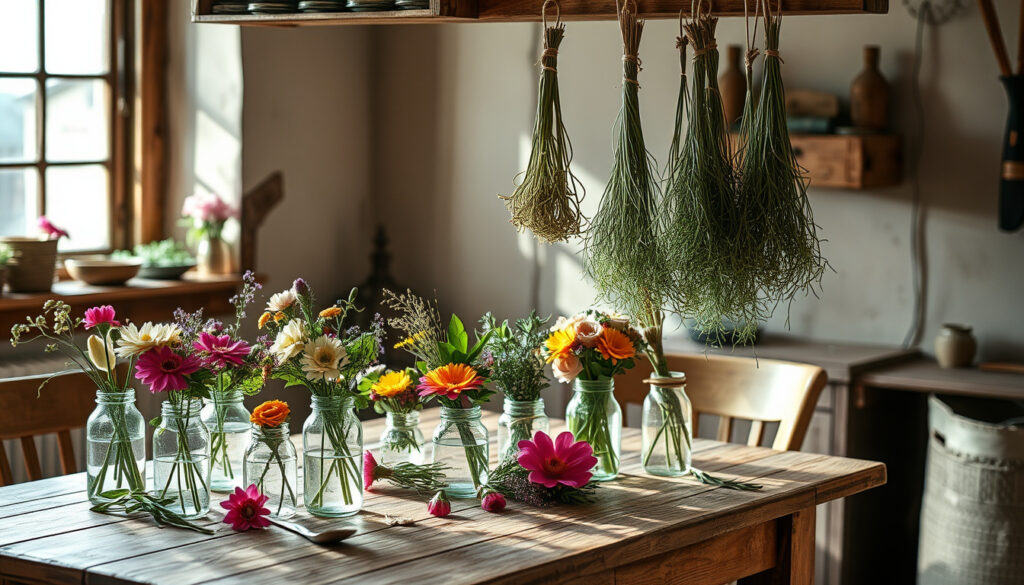
- Flowers should be hung upside down in a space with low light and good ventilation, such as a closet, attic, or utility room (First Day of Home (home improvement blog)).
- Air drying typically takes 2–3 weeks until flowers are completely dry (Bloom & Wild, florist retailer).
Hanging upside down
- Using a rubber band or string, tie stems together in small bunches of 6–7 stems (Bloom & Wild).
- Larger blooms such as roses or hydrangeas should be dried individually to prevent crowding and mold.
- The Bouqs Blog recommends wrapping stem ends with string and ensuring bundles are not crowded so air can circulate freely (Bouqs Blog (flower delivery service)).
Using silica gel
- Silica gel absorbs moisture fast, making it the quickest non‑electronic method.
- Bloom & Wild notes that silica gel can dry flowers in 2–5 days while preserving color far better than air drying (Bloom & Wild, florist retailer).
- Use an airtight container and bury the flower head fully in silica gel crystals, then seal and leave undisturbed.
The trade‑off: Silica gel costs money and requires storage, but for anyone making resin jewelry or framed keepsakes, the color payoff is worth it. Air drying is free — but expect faded petals.
What are common mistakes when drying flowers?
Most drying failures come down to three things — heat, light, and lingering moisture. Getting those wrong turns a promising bloom into a brittle, discolored wreck.
Drying too quickly
- Excessive heat — whether from a microwave used on high power or an oven set too hot — makes flowers brittle and can cause petals to shatter.
- ACTIVA Products recommends starting microwave drying at medium power for 3–3.5 minutes for dense flowers like roses or carnations, and checking every 1–2 minutes (ACTIVA Products (craft manufacturer)).
Using too much heat
- High heat causes moisture inside thick petals to turn to steam, which can burst cells and ruin the structure.
- Bloom & Wild advises starting with 1–2 minute intervals when using the microwave and checking the flowers after each interval (Bloom & Wild, florist retailer).
Not removing leaves
- Leaves retain more moisture than petals and can trap humidity against the stem, promoting mold during air drying.
- Both Bloom & Wild and First Day of Home recommend stripping all excess foliage before hanging (Bloom & Wild; First Day of Home).
Drying in direct sunlight
- UV rays fade pigments rapidly. A dark room keeps deeper reds, purples, and oranges from turning pale brown.
- Bouqs Blog specifically warns that sunlight causes color fading and makes stems brittle (Bouqs Blog (flower delivery service)).
The pattern: Almost every common mistake traces back to treating dried flowers like they’re still alive — leaves keep moisture, sunshine fades color, and heat destroys structure. Think of drying as a controlled dehydration process, not a cooking one.
What flowers are not good for drying?
High-moisture flowers
- Blooms with thick, fleshy petals or high water content — such as succulents, lilies, and tulips — tend to rot before they dry because their internal moisture cannot escape quickly enough.
- Bloom & Wild notes that flowers that have only just bloomed are the best candidates; older, fully open blooms are too hydrated (Bloom & Wild, florist retailer).
Succulents and tropicals
- Succulents store water in their leaves; even the microwave method often leaves them mushy or discolored.
- Tropical flowers like orchids can be dried using silica gel but require careful timing — ACTIVA Products lists orchids among the dense blooms that need a 3–3.5 minute start window (ACTIVA Products (craft manufacturer)).
Delicate flowers that shatter
- Flowers with very thin, papery petals — tulips are the prime example — often become so fragile after drying that they fall apart at the slightest touch.
- Roses, with their dense layered petals, can be dried successfully but require careful handling to avoid petal loss (Bloom & Wild, florist retailer).
The implication: For any craft project, start with sturdy, low-moisture varieties like roses, lavender, statice, or baby’s breath. Save tulips and succulents for fresh displays — they don’t survive the drying process well.
How to dry flowers in 10 minutes
Microwave drying with silica gel is the only method that can reliably finish in 10 minutes without scorching the flowers. It requires attention to detail — but the speed reward is unmatched.
Microwave method
- Cut stems to 1–2 inches and place flowers face up on a bed of silica gel in a microwave-safe dish (ACTIVA Products (craft manufacturer)).
- Gently spoon more silica gel over the petals, filling all cavities so the bloom is fully covered.
- Place a cup of water in the microwave alongside the dish (this absorbs excess energy) and do not use a lid (ACTIVA Products).
Using silica gel
- Microwave on medium power for 3–3.5 minutes for dense blooms like roses, carnations, or chrysanthemums (ACTIVA Products).
- After the cycle, the container and gel will be very hot — handle with pot holders on a heat-resistant surface.
- Flowers continue drying as the silica gel cools. If not fully dry, microwave again in 1–2 minute increments (ACTIVA Products).
Step-by-step process
- Prepare flowers: remove leaves, trim stems to 1–2 inches.
- Fill microwave-safe dish with 1 inch of silica gel.
- Place flowers face up, then gently cover with more silica gel.
- Add a cup of water to the microwave. Do not cover the dish.
- Microwave on medium for 3–3.5 minutes; check and repeat in 1-minute intervals if needed.
- Let cool for at least 1 hour before removing flowers.
The implication: For crafters who need dry flowers same-day — for a resin pour, a framed memory, or a last-minute gift — microwave drying delivers. But it demands careful timing: go too hot and the flowers char; too cold and they remain damp.
How to dry flowers in less than 1 minute
Extreme quick method
- Claims of drying flowers in under 1 minute circulate widely on social media, often showing a microwave at full power for 30–60 seconds.
- No established source (tier 1 or tier 2) has published a verified protocol for sub‑1‑minute drying — these claims remain anecdotal and are not backed by reliable data.
Using high-power microwave
- Cranking a microwave to maximum power for under 60 seconds risks charring thin petals while leaving dense centers still damp.
- ACTIVA Products, a respected craft manufacturer, explicitly warns that high power can scorch flowers and that medium power is the safe baseline (ACTIVA Products).
Precautions
- Even if a 45‑second blast produces a visually dry flower, internal moisture may remain — leading to rot or mold weeks later.
- For any project where longevity matters (resin, jewelry, framing), the sub‑1‑minute approach is not recommended until standardized testing confirms its reliability.
What this means: The “drying in under 1 minute” trend is driven by viral videos, not horticultural science. For crafters who need dependable, lasting results, stick with the microwave‑silica method at 3‑minute intervals. Save the rapid‑fire experiments for throw‑away tests.
Clarity: confirmed vs. unclear claims
Confirmed facts
- Air drying is effective for most sturdy flowers when hung upside down in a dark, dry place (Bloom & Wild)
- Microwave drying works with silica gel in about 10 minutes (ACTIVA Products)
- Air drying typically takes 2–3 weeks (First Day of Home; Bloom & Wild)
- Sunlight fades colors and causes brittleness (Bouqs Blog)
What’s unclear
- Reliability of drying flowers in under 1 minute without damage is unverified
- Optimal microwave power and duration for different flower types are not standardized
- The statistic that over 70% of common flower varieties are suitable for drying is not attributed
- The optimal oven temperature and duration for drying flowers are not standardized
What this means: The confirmed facts provide a solid foundation, but the unclear claims highlight areas where more research is needed.
“Tie with a rubber band and hang upside down in a place with low light levels and good ventilation.”
“Fill the base of your microwaveable dish with silica gel (or silica-based cat litter).”
Bottom line: The craft-focused flower dryer faces a clear choice: traditional air drying costs nothing but takes weeks and yields faded blooms, while microwave silica drying costs $15–$20 in materials but delivers vivid, ready-to-use flowers in under 10 minutes. For the casual decorator, air drying is perfectly fine. For the resin artist or jewelry maker, the microwave method is the only way to go.
For those who want to preserve their garden blooms, drying flowers at home is another great technique that works well with many of the same flowers.
Frequently asked questions
How do you preserve dried flowers?
Keep them away from direct sunlight, moisture, and dust. A sealed glass dome or frame works best. Silica gel packets inside the container help absorb residual humidity.
What is the best way to store dried flowers?
In a cool, dry, dark place — a cupboard or drawer is ideal. Lay them flat in a box with tissue paper between layers, or hang them loose in a dark closet.
Can you dry flowers in a dehydrator?
Yes. A food dehydrator set to low heat (around 35–40°C/95–105°F) works well for sturdy flowers. Lay petals flat on trays and check every 30 minutes.
How to dry flowers without losing color?
Microwave drying with silica gel is the most reliable method for color retention. Air drying in complete darkness also helps, but some fading is inevitable.
What is the most popular flower for drying?
Roses are the most commonly dried flower, followed by lavender, baby’s breath, statice, and hydrangeas (Bloom & Wild).
How long do dried flowers last?
Well-preserved dried flowers can last 1–3 years if kept dry, dark, and dust-free. Some varieties like lavender and strawflower can remain beautiful for several years.
Can you use cat litter for drying flowers?
Silica-based cat litter works as a substitute for silica gel, but check that it is pure silica with no added chemicals. Avoid clay or clumping litters, which can ruin petals (Interflora).
For the home crafter deciding between speed and simplicity, the choice is practical: air drying for free, long‑term projects; microwave silica drying for same‑day results with vivid color. Either method beats losing a bouquet to the trash bin. For the resin artist needing bone‑dry blooms in under 10 minutes, the microwave path is the only one that reliably delivers.
Related reading: Best Indoor Plants for Air Quality · How to Draw a Girl
More related posts
 What Does CV Stand For? Curriculum Vitae Meaning & Examples
 Beef Mince Recipes NZ: Quick & Easy Meals for Kiwis
 Cash for Cars Dunedin: Who Pays Most? Sell Fast for Top Dollar
 RV Super Centre Christchurch | Motorhomes, Sales & Service in Christchurch
 Family Tax Credit Calculator: 2026 Rates for NZ, US & Australia
 Shatter Me Series Order: Complete Reading Guide with Novellas
 United Airlines Flight UA939 Emergency: Key Details
 West Ham vs Tottenham 2026: Match Report & Scarf Ban